‘Psychogeography does not have to be complicated. Anyone can do it. You do not need a map, Gore-Tex, rucksack, or companion. All you need is a curious nature and a comfortable pair of shoes. There are no rules…’ (1)
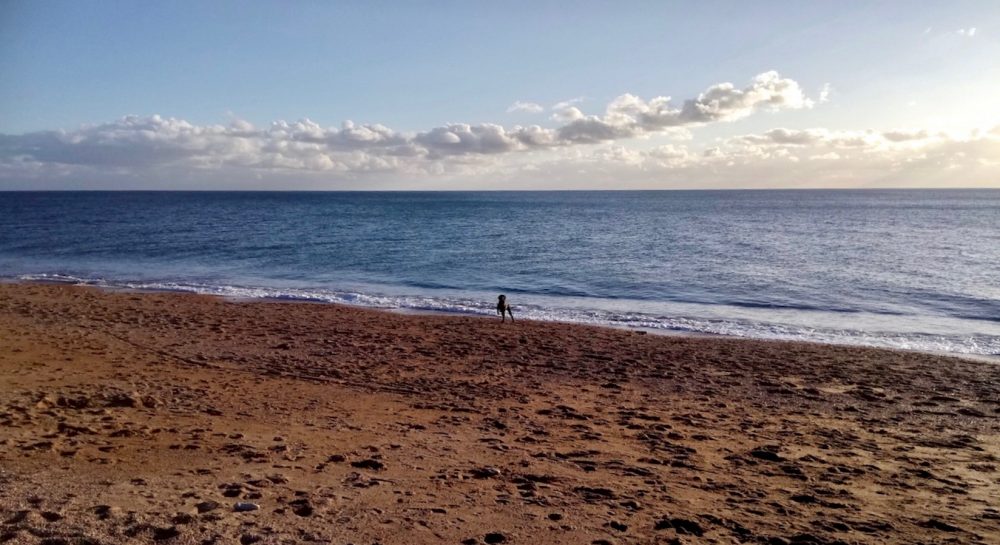
So what is Psychodography? I journeyed to the Jurassic Coast with my dog, anxious and guilty at leaving my two-year-old daughter – albeit with her capable and conscientious father – for the weekend, but with a ‘curious nature’ waiting in the wings… stayed in a VERY dog-friendly B&B; with a surprising field dedicated to dog agility training… found a dog-friendly (enough) pub for dinner… got back to the room and flicked through crap telly thinking about what the fuck I was doing there. After a sea view breakfast I asked the host for a map of the area onto which she highlighted the closest circular walk… set off to find the sea, in my Gore-Tex coat and rucksack, with my canine companion, and promptly got lost. After all… there are no rules.
I began to record my voice with a Dictaphone. including shouting from the top of the cliffs; where I ended up after getting lost and after the dog had rolled in shit. I felt safe and free enough in Dorset to start experimenting. Listening back to my recorded counselling sessions in the preceding months had felt so excruciating at first that I decided to experiment with various ways of capturing my thoughts, feelings and experiences and get more used to listening back to my own voice. I think this exercise has also become part of the movement I was seeking, a kind of emancipation of voice, and something I continue to do, on occasion, whilst dog-walking.
To give a few examples of the content and my experience of listening back to it; I sound tentative and unsure, childlike, whilst the sound of my footsteps on the ‘crunchy November leaves’ seem much more assured. Settling into the walk, I say with an exhale, ‘starting to feel the space now’. I mention that the B&B lady’s lisp reminds me of my own lisp throughout childhood and being told of the more severe speech difficulties I had early on. I am struck by the stifling frustration that surges in me when I do not feel understood or get stuck for words. I am caught up in my thoughts. And then notice my dog,
‘Aaah, Nomar’s standing up on the hill, on the silvery frosty grass… completely still, with his back leg… OH! He’s running (pause) he’s running he’s running he’s running towards me. Hello! You looked magnificent!’
My voice is fast and I feel excited and happy listening to it, I notice the change in my speed and tone and focus reflecting the quality of my dog’s running and I now recall the fulfillment of wellbeing (there must be a better word than this!) in the experience of him running back to me.
Extracts of the recordings include a louder, more urgent sounding voice, swiftly getting Nomar on the lead as we were passed on the cliffs by a running herd of sheep, and contrasting with my enthralled teenage sounding voice, with dropped consonants, as I recount the ‘lady farmer…bezzin’ past…on a quad bike’ and her three sheep-dogs running close to the ground alongside. I have a rousing curiosity about powerful women… and the sheep are Badger-Face Welsh Mountain Sheep, which have long been favourites of mine. They are striking and confident and seem very relaxed around dogs, Nomar came almost nose to nose with one.
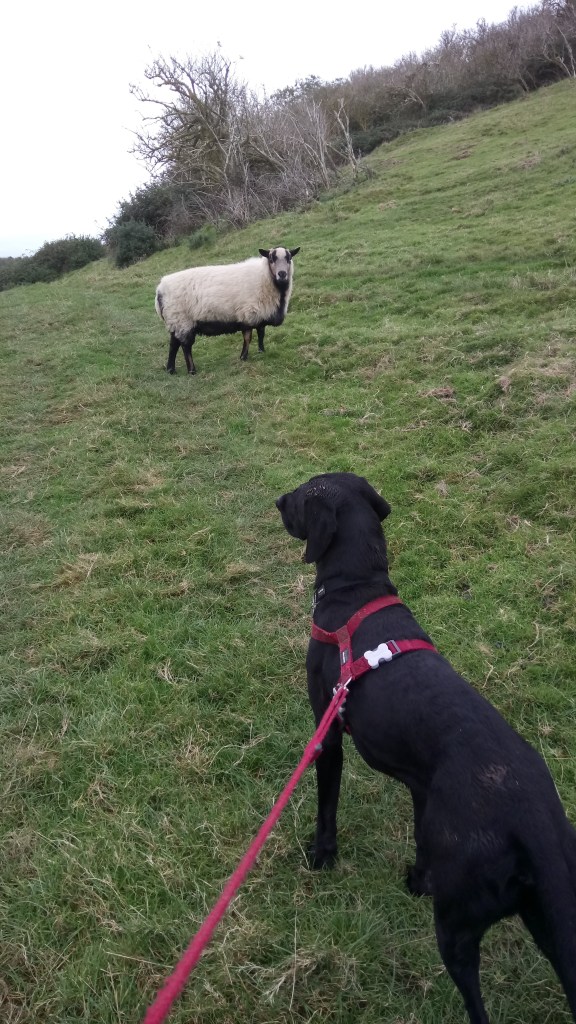
I grew up on the border of Wales and we had sheep on our little farm. In fact, I had a pet lamb called Sally who had been rejected by her mother. I took her for walks on a lead around the village. The black and white Badger-Face sheep has become one element of my ‘Configurations of Self’ (2) in therapy, representing my desire to ‘fit-in’ and be one of the crowd, but at the same time longing to feel secure in my difference and individuality.
In the early stages of voice recording, I became aware of just how prevalent my inner critical voice still is, having spent many many hours and money in therapy working on this over and over again, over the years. Then the stark contrast between outwardly voicing what is going on in my head, compared with what I notice externally in my immediate environment in the moment, and how I feel in response: A sort of self-directed phenomenological inquiry (e.g. Joyce and Sills, 3). I have latterly steered towards the philosophical phenomenologist Maurice Merleau-Ponty to help inform this process and re-discovered Heidegger and Sartre. Thank you James (dissertation tutor). I experience many ‘Authentic moments’ walking with my dog, moments described by Heidegger as ‘those in which we are most at home with ourselves, at one with ourselves.’ (4)
Back to powerful females: Another ‘Self’ I feel connected with is a girl with an eagle, inspired by a newspaper article about the documentary ‘The Eagle Huntress’ (5); about a 13-year-old Mongolian girl with a ‘near genius for working with the eagles’ even though the ‘elders grumble that women are too “fragile” for such an arduous business’. I know nothing about hunting with eagles, but I do feel I have an affinity with animals and this brings out my courage, strength and assertiveness, in contrast to my (reducing) tendency to be passive, even submissive, with other humans. I do have a ‘fragile’ Self too; a small frog with hidden emotions, defended, constantly adapting myself for others, often suffering in silence (or hiding in silence?). I recall feeling completely powerless at times in the past, my boundaries traumatically invaded on occasion. Yet, high up on the cliffs of the Jurassic Coast, I connect with that courageous girl, at one with her powerful companion animal. Vulnerable out in the open, safe with my dog.
As I relaxed into the weekend, I recorded less of my voice and more of the sounds of walking; on the crunchy leaves, grass, pebble beaches, paddling in the sea and the lovely contrast between my somewhat dogged – pardon the pun – footsteps, and Nomar’s whimsical padding around all over the place. After this, I sounded much calmer on the voice recordings, with no conflict, no judgement.
I accidentally recorded my whole journey home – the Dictaphone left on in my pocket; the final walk back to the B&B, packing up the car, driving and singing along to 90s rock and grunge, getting back to an empty house. Then… the murmur of the radio, the click of the kettle, and shortly after, my husband and daughter arriving home from the park and the heart-warmingly familiar greetings between us all; aware more than ever of the gratitude and comfort these small details evoke, of what it means to be ‘home’.
I recall an article, ‘the healing power of the ordinary’ by Gretchen Schmelzer (6), with a picture of a sleeping dog and a basket of laundry. It is about trauma recovery and the healing power of everyday, ordinary experiences and seems to fit with the ‘ordinary, everyday, experience’ of a ‘phenomenological approach’ (7).
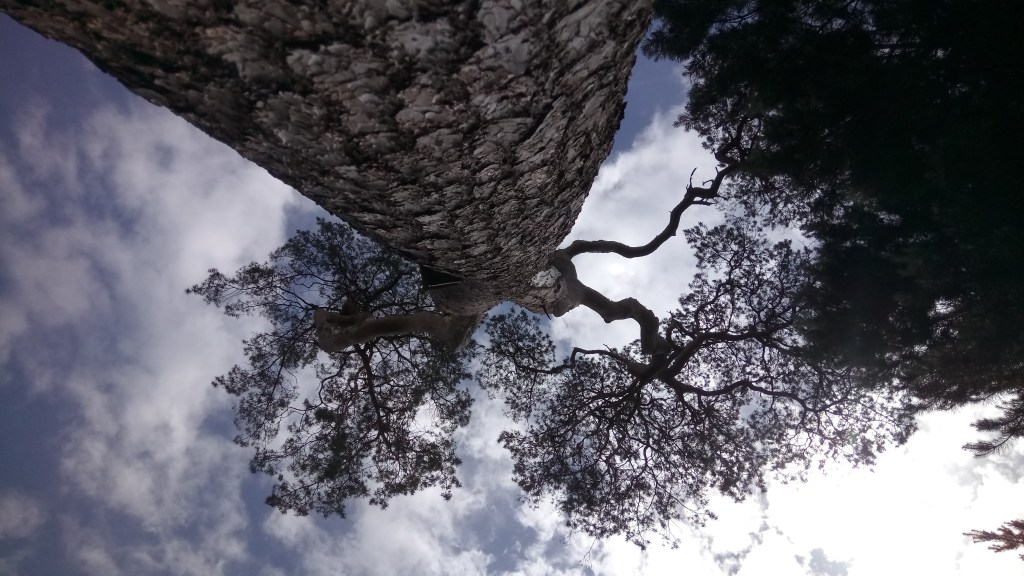
Daily routine and rituals, including walking the dog of course, have become integral to me staying within the ‘window of tolerance’ (8). Schmelzer also writes about the courage of parenting with a history of trauma; meeting your own voice; the ‘healing fog’. I also came across, ‘Trauma makes you live in ‘backwards world” and wonder if this is why walking forwards feels so important. It sometimes feels like an upside down world for me too.
© 2021 Psychodography Blog
REFERENCES
- Richardson, T. (Ed) (2015) Walking Inside Out: Contemporary British Psychogeography. London: Rowman & Littlefield.
- Mearns, D. & Thorne, B. (2007) Person-Centred Counselling in Action (3rd ed.). London: Sage.
- Joyce, P. & Sills, C. (2014) Skills in Gestalt Counselling and Psychotherapy (3rd Ed). Sage.
- Moran, D. (2000) Introduction to Phenomenology. New York: Routledge.
- Macnab, G. ‘The Eagle Huntress’. Review of The Eagle Huntress, directed by Otto Bell. The Independent, Dec. 2016.
- Schmelzer, G. (2014, 2016) http://gretchenschmelzer.com/
- Silverman, D. (2010) Qualitative Research (3rd Edition). London, UK: Sage Publications.
- Siegel, D. (2009) Mindsight – The New Science of Personal Transformation. NSW Australia: Scribe Publications.

 Psychodography