This is a dabble with psychodography; combining psychogeography and dog-walking. An attempt at an autoethnographic study of self-discovery, trauma-recovery and balance, as a new counsellor negotiating a multiplicity of emotional demands. I’d like to tell a story of mindfulness, movement and modulation with my dog as my steady companion and witness. I’ve come to realise, this is perhaps a process of phenomenological inquiry. It is certainly experimentation and it was, initially, an interweaving of three main theoretical approaches which have influenced the process; Heinz Kohut’s Self Psychology (1,2), Jennifer Jane Johnson’s research into well-being gained through relationships with companion animals and Babette Rothschild’s Somatic Trauma Therapy. These are some of the books I read whilst studying for my Counselling Diploma.
My connection with animals and the outdoors was an essential part of my ‘secure base’ as a child. The grounding qualities of this sharply came into focus during the overwhelming expedition of training to become a counsellor at the same time as still being a relatively new mother. Johnson suggests, ‘Factors in people’s lives that might provide a buffer, or relief to distress, are worthwhile investigating…the human-animal bond merits attention in counselling training, research and practice’. During my training I inevitably had to face loss and trauma from my past and needed to learn how to dip into it in a manageable way so as not to become overwhelmed; putting into practice my mindful gauges and grounding tools by drawing from Rothschild’s ‘8 Keys to Safe Trauma Recovery’ (3). This has helped me to explore effective self-care techniques for me and experiment with various modes and methods of capturing my experiences out walking, with the “constant positive presence” (4) of my dog. These all inform my pursuit of a healthy balance between re-visiting my past and staying grounded in the present, unearthing power from vulnerability and encountering what it might mean to belong.
I read a Psychogeography article by Chris Rose called ‘Walking Together’, in the BACP magazine, Therapy Today. This initially gave me the clarity I was seeking for the project I was embarking on. From reading this, to then discovering the book ‘Walking Inside Out’ by Tina Richardson (5), I experienced a fresh nostalgia and jubilation when I read the chapter ‘Walking the Dog (For Those Who Don’t Know How to Do It)’ by Ian Merchant; set in my childhood county of Herefordshire. In homage to the early 1950s Parisian Psychogeography movement, Merchant seeks to achieve an altered state of consciousness in his familiar surroundings, which he does by smoking a spliff – before walking his dog around the village. For some, Psychogeography is focused on the local area, for others it is about exploring somewhere new without a plan or even necessarily a map. It is the perfect activity for me, because I love walking and I’m really good at getting lost! I don’t even need to smoke anything to help with the latter.
I realise there are others who share my penchant for documenting the qualities of dog-walking, or walking and talking, or simply walking. I no longer assume that this is just a strange thing I am doing on my own; a familiar feeling as a child roaming the fields alone talking aloud. Or sometimes with my cat following me, until he found something more interesting to do, like guarding a rabbit hole.
I have been inspired by and found some parallels with Devika Chawla. This was my first encounter with autoethnography and I highly recommend her captivating website, ‘Rhymes, Reasons, & Ramblings’. In ‘Walk, Walking, Talking Home’ (6) she evokes such a rich sense of space, place, movement, contrast and loss, that I almost feel I can touch it. Like me, she has also spent time in the United States and compares her walking experiences there, with those in her small north Indian home-town in the Himalayas.
Experimenting with walking (and writing), and reading about others doing the same, has become a form of self-care and self-discovery for me. I’d like to emphasise approaches to trauma recovery, and self-care in general, which do not involve reliving the past; either in the form of intrusive thoughts or de-stabilizing interactions with a therapist or therapy/personal development group. It feels immensely important to further raise awareness of the risks around re-traumatisation for both counsellors and clients.
I want to also highlight that mindful meditation does not have to involve sitting still; not helpful for everyone, as Rothschild accessibly explains in ‘8 Keys to Safe Trauma Recovery’. These are steps towards personal integration, particularly in striving to soothe my internal urban/rural struggle, ambivalence about trust and intimacy, balancing vulnerability and power and yearning for a sense of ‘home’. From at first plotting my course with mindfulness, using Rothschild’s ‘KEY 1’ as a guide, I have drawn further strength and resolve from ‘KEY 3: Remembering Is Not Required’ and crucially ‘KEY 7: Get Moving’.
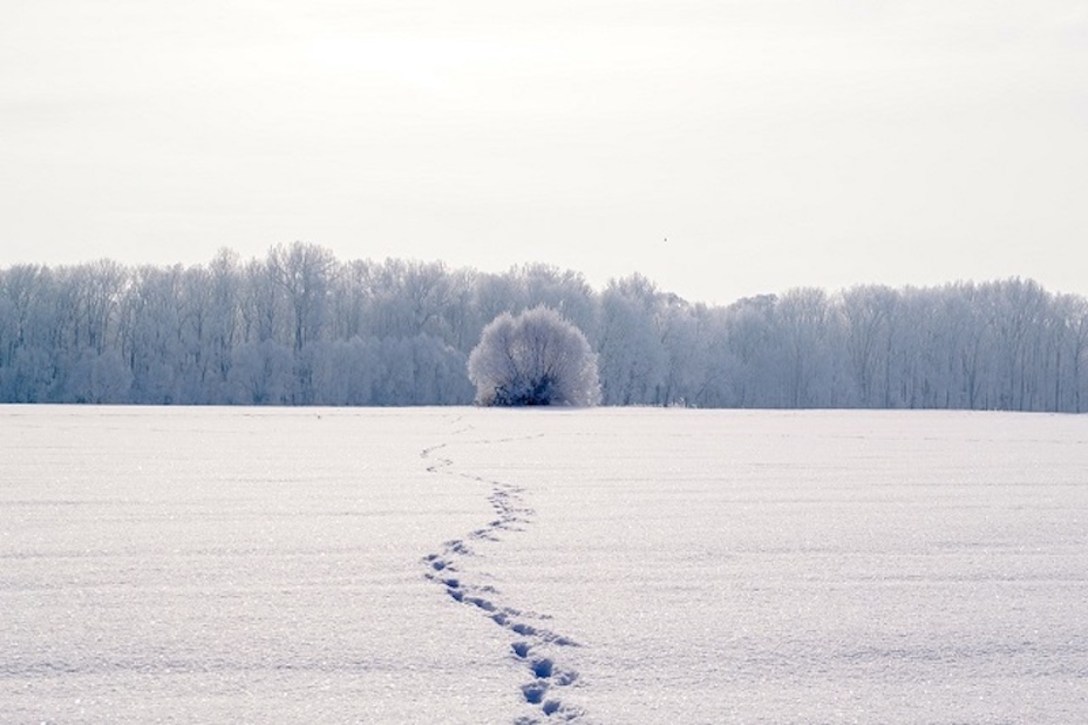
‘As we ‘walk alongside’ the client, we travel through internal landscapes of desired utopias and feared hells… to find new pathways through old and scarred territory.’ (7) It is new pathways that I pursue for myself, whilst co-creating new tracks through old terrain with clients, like sheep tracks trodden repeatedly into hillsides. Long-term placement clients I worked with have courageously sought therapy for their battle with addiction and traumatic past. I am reminded of the ‘shaky ground’ Gerhardt (8) describes in ‘Why Love Matters’; the effects of too much cortisol in early life, the relationship between dopamine and processing of reward and punishment and how this is inextricably linked with drug-taking, or other self-soothing/self-harming strategies (9). One client was searching for ‘fresh footprints in the snow towards a safe, cozy cabin’. It was a privilege to witness this journey, walking alongside the client as much as I was able, and the vividly lucid image has stayed with me ever since.
Similarly to Rose’s article, my expedition draws together many things, the essence of which is relational. Relationship with self, relationship with place, relationships with others; strengthened, re-considered, re-kindled, or new ones founded, through this new way, for me, of approaching self-development. The ‘fresh nostalgia’ mentioned earlier is beautifully summed up by Rose; ‘Encountering psychogeography is simultaneously like greeting an old friend and discovering a stimulating, quirky, innovative and challenging new acquaintance.’
To ‘Begin within’ (10) is to set the scene of my internal world and the journey I have enjoyed and endured and was necessary, for me to start stepping out – facing the world in all of its beauty and ugliness and everything in between. All of its challenge and struggle.
I want to thank my wonderfully creative and intuitive, integrative counsellor for fervently reflecting and re-reflecting my need for space, movement and quality time with my dog.
© 2021 Psychodography Blog
REFERENCES
- Kohut, H. (1972) Thoughts on narcissism and narcissistic rage. Psychoanal. Study Child 27:360-399.
- Kohut, H. (1977) The Restoration of the Self. New York: Int. Univ. Press.
- Rothschild, B. (2010) 8 Keys to Safe Trauma Recovery: Take-charge Strategies to Empower Your Healing. W.W. Norton. New York. London.
- Johnson, J.J. (2015) ‘The experiences of pet owners’ well-being gained through their relationships with their companion animals’ in Listening To Less-Heard Voices: Developing Counsellors’ Awareness, edited by Peter Madsen Gubi.
- Richardson, T. (Ed) (2015) Walking Inside Out: Contemporary British Psychogeography. London: Rowman & Littlefield.
- Chawla, D. (2013) Walk, Walking, Talking Home. Rhymes, Reasons, and Ramblings. Retrieved from https://devikachawla.wordpress.com/
- Rose, C. (2016) Walking Together, Therapy Today, 22-25.
- Gerhardt, S. (2004, 2015) Why Love Matters: How affection shapes a baby’s brain. London/New York: Routledge.
- Aaronson, R. (2006) Addiction: This Being Human. Authorhouse.
- Saad, L. (2020) Me and White Supremacy: How to Recognise Your Privilege, Combat Racism and Change the World. Sourcebooks.

 Psychodography