Blog

  • ‘Nothing as It Seems’

    ‘Nothing as It Seems’

    I used to be a huge Pearl Jam fan. This started around age 12, I think, and their music carried me through the rockiest years of my life. This song (above) came on while I was driving the other day. I later looked up the lyrics; a habit that has stayed with me since early adolescence. I came across this, written by the bassist Jeff Ament,

    It’s a little bit reflecting on where I came from…I grew up in really rural area in Northern Montana, and [“Nothing As It Seems” is] looking back at [that]. I think until two or three years ago, I looked back at my childhood as being a fairly utopian situation where I had the freedom to ride my bike around town when I was five years old, and my parents didn’t have to worry… there have been some things that have kind of allowed some darker things to come to the surface of my childhood, seeing things that I had kind of selectively forgotten for my own mental health or whatever.

    https://genius.com/Pearl-jam-nothing-as-it-seems-lyrics

    My own rural childhood on a small farm, in subsequent memory; felt like a vast expanse of time and space. It occurred to me recently that I was there for just over 10 years. I’ve been living in my current house for just over 10 years too and I have lived in Bristol for 17 years and I have lived in cities for nearly 30 years… if you can count Hereford as a city; it is technically, but one of the smallest cities in the UK. Yet I still consider myself a country girl at heart. Time of course, feels different for a child, and the formative years are unquestionably defining.  I don’t remember much of them though… who does?  I don’t know what my earliest memory is.  I have always had such a vivid imagination, such that whatever I’ve been told about myself, my child self – an elaborate image has been created in my head to go with the story.  One of those stories was not even true, so I have a false memory.  This ‘memory’ is of dropping my dummy (pacifier) on the ground and the chickens rushing in, surrounding me, pecking frantically at my dummy.  This didn’t happen!  This was what I was told happened because, I assume, my parents thought it was time for me to not have a dummy anymore (I imagine myself as one of those toddlers always with a dummy in my mouth – like Maggie Simpson).  I’ve heard that these days, some young children are encouraged to post their dummy through a letterbox when they get to a certain age; three or four or whatever.  

    I guess all parents have different ideas about how to support their children through life’s transitions.  Some parents, for example, think that ancient statues are pornography and that school Principles should be fired for teaching such iconic artwork to Sixth Graders. Or is that just ‘fake news’?  

    I digress.  The ‘utopian’ part of my childhood, I suppose, was to do with having a lot of freedom to roam around the farm; spend time with animals, make dens in the woods, hack through undergrowth like it was a jungle, walk the perimeter of a field at sunset while the lambs performed their early evening races.  Let my mind wander with my feet.  This is what I try to recreate, when I get the chance.  My dog keeps me company while I get lost in… or come back to? …my thoughts and sensations.  Quite a different environment to the farm on the fringes of a small hamlet. I often wander along the river, and worry as I notice the subsidence beneath the new tower blocks, which are under construction on the river bank. Then I am pleasantly surprised at the street art, which has had an upgrade compared to five or so years ago – top of the list is the cheeky ‘Burglar Bill’ (one of my son’s favourite stories). I eventually wind my way back through Arnos Vale cemetery of course… sometimes with sadness, other times with curiosity, less and less with rage and once in a while, with playfulness.
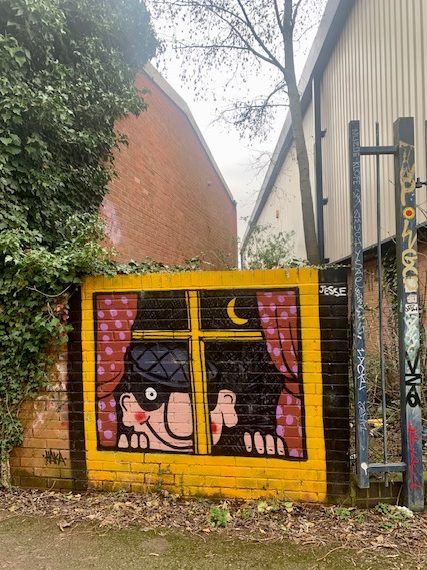
    Since my winter post, ‘Thank You & Goodbye’, I have felt resistant to continuing with (what has become) this seasonal blog.  It is now pretty much the end of spring and I’m struggling to finish it off, although it’s been whirring away in the recesses of my mind for months, years.  Breaking free and taking shape, in glimpses, in my conscious thoughts, whenever I roam with Nomar.  I guess I haven’t done enough roaming this spring.  Can I blame the weather? I find myself questioning what I meant by ‘thank you and goodbye’.  Was I playing with the idea of stopping, I wonder.  Stopping writing altogether?  No, surely not.  I need it, I really do.  It brings me back together again.  But writing for others to read… I’m not sure what my purpose is in that respect.  I think I have known at times.  Right now I don’t.  I’m giving it a go anyway, because I like to stick to a plan – a post for every season.

    Spring seemed fairly tentative this year, given the unusually cold weather.  I entered this year wishing Christmas time would last a little longer; I haven’t felt that since I was a child, way before my parents’ acrimonious divorce.  Then there was a lot of waiting… for spring.  I struggle with the in-between times, or so I tell myself. The waiting, the limbo, is compounded moreover by the pervasive knowledge of my father’s cancer; detained yet again by yet another new treatment.  And the absence. And the distance. What next?  What to do with this extra ‘precious’ time, from the other side of the Atlantic Ocean.  I don’t like the in-between times; I like the middle of the season, or so I thought.  Even the relied upon constants of the seasons feel precarious this year. More so each year that passes. And the constants I came to rely on in meeting up with my father and family at certain times each year, have all but gone. We met three or four times a year, almost as reliable as the seasons, until the pandemic… and the aftermath of parched, brittle, cracking relationships.

    My mind meanders back to spring last year. I took a brief trip away with Nomar, my dog.  I had spent a whole weekend away with him towards the end of 2016, when I needed a break – space – time to myself; and it became so much more.  The weekend was a truly transformative experience (please see ‘The Experiment’ if you want to know more).  This time I was leaving more responsibilities than before: My second child; less than a year old when the pandemic started – seems to struggle when I’m not around, or so I perceive it.  I think I struggle more than before with not being at home too, somewhat institutionalised by lockdowns.  Nevertheless, I plucked up some courage and booked a B&B near the Quantocks; planning to find the waterfall in St Audries Bay, near Kilve.  Nothing spectacular, not too far from home.  It felt wise, or comforting, to temper my ambitions on this trip – only slightly resigned, and a little regretful that I had not ventured to see a breathtaking waterfall when I was in Iceland the summer before.

    “Quantock country will not appeal to those who admire only the magnificent and grandiose,” 

    (Berta Lawrence)

    Fine by me!  Still somewhat in a Covid fog, much less confident, more afraid of everything and easily overwhelmed.  In fact, as soon as I arrived at the B&B I nearly went straight home.  I was met by multiple dogs guarding the place; the alpha was old, half blind and snarling.  Not a person in sight.  I had told my son (age two at the time) that he couldn’t come with me because it was a dog hotel – it turned out I wasn’t lying.  I’m not usually put off by dogs, but this was too much even for me.  Nomar stayed firmly within the safety of the car boot.  Luckily a ruddy faced older woman appeared to welcome us in, assuring us not to mind the gnarly canine bearing it’s teeth. We edged past him, backs against the wall, and were shown to our room. An enthusiastic spaniel called Kevin also helped to put us at ease. The lady said she could tell I was a country girl and invited me to come back the following year to help with the lambing. I really thought I would return, but of course I haven’t.

    Once our overnight stuff was settled in the room, Nomar and I braved the treacherous walk through the hallway, past Cerberus* and out of the farmhouse door, so we could set out to complete our (my) mission. I thought I was determined to find the waterfall, however I drove along the same road, back and forth, several times – feeling uncertain about where to leave the car. I finally parked in a large lay-by in front of an obvious public footpath entrance to the woods. Regardless, I had the feeling I was doing the wrong thing. Looking back now, I really don’t know what I was so worried about. The walk down to the beach involved passing through a holiday park, where I felt inordinately shifty as I snuck between static caravans and scurried down the steep steps to the bay. I felt like a criminal! I came to realise that I could have paid a small amount of money to leave my car in the holiday park car park, to access the beach with complete legitimacy. But I couldn’t think straight, with the fog of excessive inner conflict, even of being away from my home/family in the first place. Was this predominantly due to the bewildering effects of lockdown management? I kept thinking; am I breaking the rules? Then later, I reflected on the added impact of being in a new job for a year and still struggling to settle, plus the thrill, diffidence, turmoil, promise… associated with starting a new process with a new therapist.

    Once on the beach I felt safer. I could breathe. Nomar slalomed the water’s edge, moving away and coming back to me, repeatedly. The damp pitter patter, so predictable, reliable, familiar and comforting. I gazed out at the grey sea. A hint of cloud highlighted the unexpected variety of colours, shapes and textures – a mixture of flat pebbles, sand, shingle and rock… intriguing curved cave crevices, lines of old posts, wave-cut terraces. I counted the posts, the shapes – three, four. Oranges, greys; layers upon layers of difference in the cliff, even a small patch of black sand beneath a tiny waterfall – a miniature Iceland.
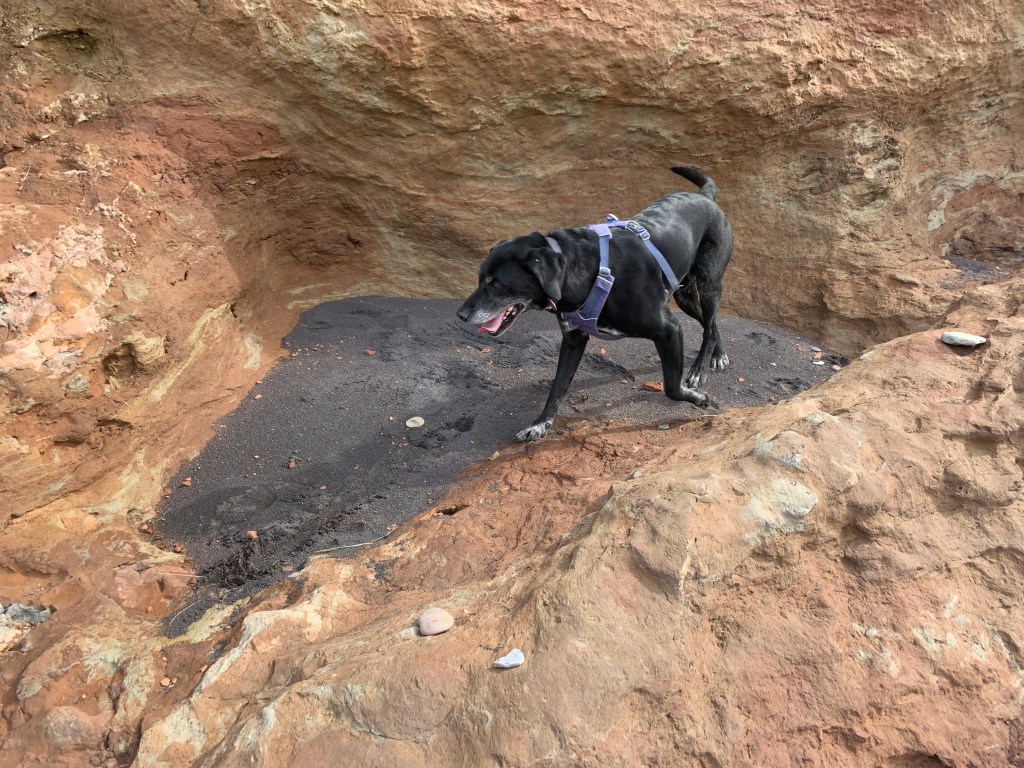
    When I was actually in Iceland, and in the highly anxious build up to Covid travelling, I thought I needed to see a huge waterfall… to imagine the trials of the pandemic washing away, rushing away, with great force. At St Audries, I saw a tall, thin, wonderful waterfall – kind of magical. Gentle. I stood in the misty spray, smiling. I walked out to the furthest point I could into the sea, out along one of the static waves of rock. Someone was calling me, three or four times, as I stood there trying to soak it all in. Are you kidding me? I thought. Is there no peace for me? In hindsight though, why didn’t I just turn my phone off, even for an hour or two.
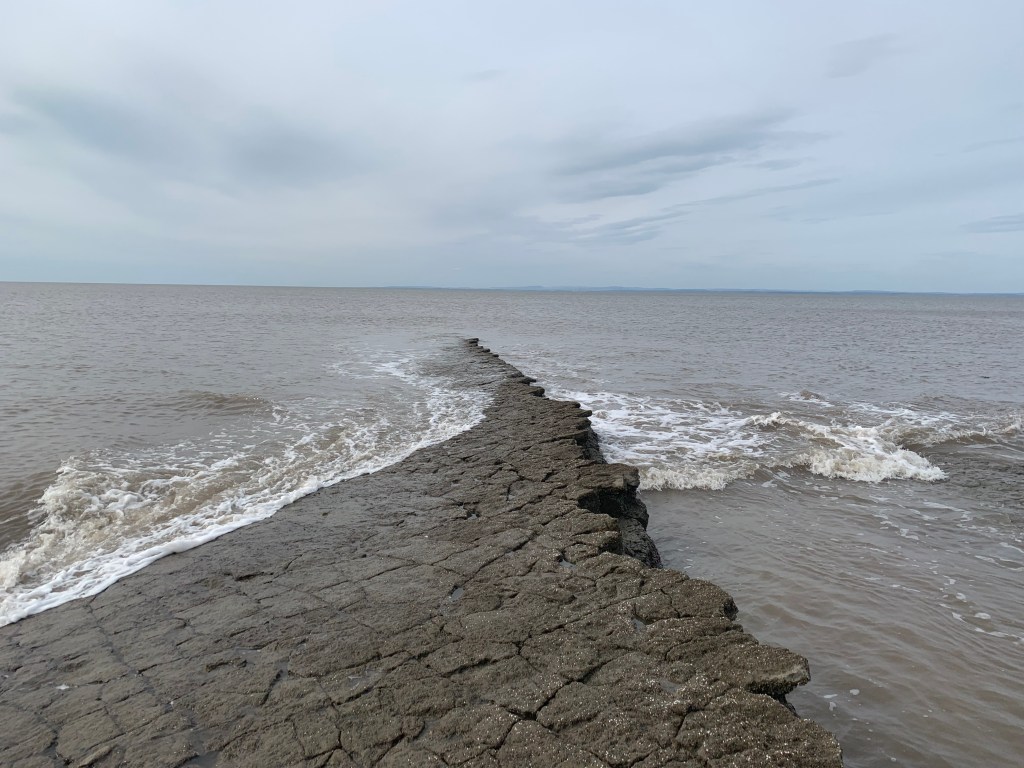
    In recent months I have come across the term “thin places”, which refers to a place of a particular type of energy, that has a thin veil between this world and the eternal world; between life and death; between earth and heaven (depending on one’s beliefs):

    They are stopping places where men and women are given pause to wonder about what lies beyond the mundane rituals, the grief, trials and boredom of our day-to-day life. They probe to the core of the human heart and open the pathway that leads to satisfying the familiar hungers and yearnings common to all people on earth, the hunger to be connected, to be a part of something greater, to be loved, to find peace.

    https://thinplacestour.com/what-are-thin-places/

    This was something of my experience of Iceland. And when I look at a world map at the part which shows the UK and North America, with the Atlantic Ocean in-between, and Iceland slightly north… I see a sort of triangle. My father and I met in the in-between place, north a bit, after such a long time apart.

    The Quantocks did not feel like a “thin place”, which was fine. I wondered if the Quantocks might be boring and whether this was what I was craving,

    “The beauty lies in the simplicity – and the variety only in changes wrought by the cycle of the seasons…” (Berta Lawrence)

    A year in with my therapist and I found myself feeling bored of my own voice, going over the same old past stuff. A feeling of ‘what’s the point?’ Shouldn’t I be over all this by now? This makes me laugh at myself because I recently delivered a seminar about ‘ambiguous loss’ and ‘prolonged/disenfranchised grief’. When a feeling of boredom comes into therapy, as a client or a therapist, the thinking is that this is telling us something important, that it’s something to be curious about,

    Boredom covers for all of these feelings. Because who wants to be angry at work, self-conscious at a party, or lonely at home? … I’ll provide a space to let out the anger, the frustration, the sadness, the hopelessness, the whatever, and see that it’s not going to push me away. That it’s not going to destroy them

    https://www.goodtherapy.org/blog/bored-with-therapy-unmasking-real-feelings-behind-boredom-0620174

    My parents often got bored and changed things – house moves, holidays, pets. There were several holidays which stood out; some disastrous, others just strange and unnerving. During one holiday in Italy, when I was about 6, my mother stayed in the hotel room for the entire week. My father would take my brother and I down to the pool every day and two friendly young men (?late teens, early twenties) lifted us onto their shoulders in the pool, so we could wrestle each other in the air, each attempting to push the other into the shining water below. This may have happened on just one day, but I still remember their names. On another day my Dad decided to take us for a run. The heat of the day was stifling and I had a stitch. We came across a man doubled over at the side of the road – he was having a heart attack. I don’t remember but I assume my father summoned help. We were staying in an old villa. At the end of the corridor outside our room was a large cracked mirror. I was scared of it. I couldn’t look at it and would run past as fast as I could, heart racing. I think this holiday represents my first sense that something in my family was broken.

    As I reached the halfway point on my second walk in the Quantocks, around Hawkridge reservoir, one of my walking boots broke – the sole came right off. I managed to carry on anyway and complete the walk, somehow. I met some friendly, peaceful horses in a field on the way back; they seemed to say, ‘Hi, nice to meet you, shame about the boot. Good luck!’. The evening before, Nomar and I went to a pub called ‘The Friendly Spirit’ where I had pie and chips and a pint of beer. I shared the pub with a large group of heavily tattooed and muscled men, watching rugby on a big screen. They kept apologising for being loud. They seemed puzzled by my presence. Upon leaving, whilst crossing a pleasing bridge over a brook, I overheard a teenage conversation and felt compelled to capture snippets of it; “You know the truth, what’s the point in denying it or accepting it! …why don’t you hashtag – I’ll punch you in the face” (girl carrying 3 large bags of crisps and 2 large slabs of chocolate).

    Devoid of suitable footwear, I decided to drive up to Will’s Neck before heading back to Bristol – very low on fuel, it was a risky decision. Worth it though to walk along the ancient drovers’ road:

    There’s something antediluvian about walking on this unmade track. If you’ve seen Lord of The Rings movies and you want to feel what it might be like to be in such a world – try taking a turn along this prehistoric trail. Ancient gnarled beeches are a feature of the wide rutted road and somehow it’s easy to imagine Somerset’s answer to a bunch of Hobbits marching along here.

    https://www.martinhespfoodandtravel.com/hespfoodandtravelhome/wills-neck-highest-hill-on-the-quantocks

    My Mum and Dad were big fans of the Lord of The Rings books and I remember listening to the audiotapes on long car journeys. Gollum’s voice still haunts me, in a fond way. I didn’t hang around long on the Quantock Ridge however. Not seeking an other-worldly experience this time, contrary to the qualities of my childhood rural roaming. Rather I sought to settle myself and I’m not sure that I achieved it. Apparently on a clear day, the 360 views up there offer a glimpse of the new Severn Bridge and beyond it, the Brecon Beacons; I imagine my present fading into my past with the hazy horizon. In fact I did not see any panoramic views. I hurried to re-fuel the car and rush back home.

    ‘…A blanket like the ozone

    It’s nothing as it seems
    All that he needs is home
    And all that he sees
    Is nothing he can believe

    Saving up a sunny day, something maybe two tone
    Anything of his own, a chip off the corner stone
    Who’s kidding? Rainy day, a one way ticket headstone
    Occupations overthrown, whisper through a megaphone…’

    *In Greek mythology, Cerberus, often referred to as the hound of Hades, is a multi-headed dog that guards the gates of the Underworld to prevent the dead from leaving. (Wikipedia)

    © 2023 Psychodography Blog

    REFERENCES

    • Lawrence, B. (1952). Quantock Country. Westaway.
  • Thank You & Goodbye

    Thank You & Goodbye

    Do you ever wish you could have an ending like a comedian dropping the mic and disappearing off stage? I do. ‘Thank you and goodbye’. Boom! Gone.

    Prolonged goodbyes have become something of a fixation for me… since I discovered it’s ok to mark endings. The goodbye bit is not even the hardest bit, it’s the thank you. I get so full up with love and gratitude and awe (and a whole load of other more slippery emotions), for the people in my life who have helped or inspired me in some way, that I fear I might burst right in front of them – explode and cover them in my vulnerability. Soak them, like a popped water balloon. I often write something clumsy and awkward in a card, to avoid thanking them to their face – less sticky.

    In that vain, I am writing a thank you letter to the year that is ending:

    Dear 2022,

    Thank you for no lockdowns and a semblance of normality. A new normal. I am grateful for all of the people I have met and connected with; some briefly, others not so briefly. Thank you for the continuing relationships in my life – as this year draws in and I hurriedly write multiple Christmas cards, I register that I know a lot of people. This surprises me still, though I hope to be less overwhelmed by this in the coming years, that I may learn to embrace it. That said, I am taking steps to simplify my life a little – I am thankful for finally resolving some difficult decisions this year.

    I am grateful to 2022 for giving my father another year – I wonder if 2023 will bring with it the final goodbye, although I’ve wondered that every year since 2017. I hope to reconcile within myself that I will never feel prepared for the death of a loved one, and for that to be ok. Thanks to my therapy this year, I do feel more settled in myself than I did this time last year; more confident, considerably less anxious, clearer-headed, more open to love… and loss. That’s the best preparation I can possibly hope for.

    This was going to be a post about ambivalence. But I changed my mind. As I write this instead, an understanding deepens and takes shape, that it is about much more than saying goodbye to one year. In January, a whole decade of my life will be ending. I hope the next decade is less eventful; on a personal, national and global level. I know, this is a big hope. A big wish.

    I have lost count of the number of people I have said goodbye to this year – working in the NHS and charity sector has meant many wonderful colleagues leaving; as we all grapple with the post-lockdown mental health crisis. I have had the urge, repeatedly, to drop everything and walk off stage. Jump ship. Into what?

    I didn’t jump and the ship didn’t sink. Then it dawned on me… we’re not even on a ship and we’re not lost at sea. We are climbing a mountain and might nearly be at the top, although it’s hard to say for sure. I pause, close my eyes and breathe the mountain air deeply into my lungs. When I open my eyes again, I am surrounded by swifts darting and diving, flying so close to the heather but never touching the ground. We pass narrow streams as they wind and whirl their way down the mountain. I sense I will reach the summit at dusk, in summer.

    From the top I will look down and instantly be home; observing the city lights glimmer on, one by one. I will hear ambulance sirens close by, a toad rustling in my semi-wild garden, the faint fast whistle of a bat whizzing past my ear. I will feel the peace and contentment in my gut as my children sleep soundly in their beds. I can see their bedroom windows. I notice my dog sniff the air around us, I watch him wait for a signal that it’s time for him, too, to go to bed. A light comes on and I see the figure of my partner moving around the kitchen. I turn to stare at the city lights once more, and the last faint glow of sunset on the horizon. I look up and wait… for my eyes to adjust to the gently glinting stars against the darkening sky. Some things, I hope, will not change next year, or the one after that.

    Right now though, it is winter. I am grateful for the few bright frosty days we had before the Christmas rain came. For just enough snow to take the children sledging. And for friends, for reminding me there can be magic at Christmas time. Thank you. Goodbye.

    © 2022 Psychodography Blog

  • Birds

    Part 1 – Away

    It turns out, I also write when I swim. It’s the movement. A slight challenge to not get the notebook wet though.

    I am in Massachusetts visiting my father who has terminal cancer. This is also a holiday. My mind has felt scattered across multiple places and disparate times these past few years, the most terrifying of which is the future. ‘Blindboy’ talks about ‘purposeless distress’ in his podcast (1). His followers had requested advice on how to cope with the news these days. So he produced, ‘A mental health plan for when the News is overwhelming’. To put it very briefly and simply (and not doing it justice), he suggests reducing time checking the news and social media. Instead, focusing on compassion; for self and others – to minimise overwhelm wherever possible, to stay functional, to maintain an informed and caring relationship with the wider world[1]

    I wish I had the time to listen to all of his podcast episodes, there are so many. Aside from comparing Star Trek and mackerel appreciation, another highlight for me has been the very moving episode, ‘Intrapersonally Speaking’ – he mentions using excessive language about oneself due to how adults have unfairly described you as a child, when they should have been helping.

    The episode about the news, and essentially about self-care, also really struck a chord with me; what’s the point in succumbing to despair, to what extent can I choose to not focus on it, in order to be productive and effective at work, look after myself and my children, maintain connections with family and friends? Especially on holiday, surely – my chance to recharge, to some extent, and to spend precious time with my father, to some extent. I decided to set myself a challenge in preparation for this post: To focus on one place and one time; where I am right now, at this time. Also, to use all of my own words and try not to retreat into others’ words, as I often do. So far I’ve only used a few of somebody else’s words. Not bad.

    Swim… Write… some kind of hawk hovers right above my head – I cup my hands around my face as I look up at it – the first cloudy day since we got here, yet my eyes still crease against the glare… in contrast to the quenching water on my skin.

    Swim… Write… Swim… I really want to see a hummingbird, apparently they were close to the house yesterday (my Dad has a nectar feeder out for them) – they are one of my favourite birds; so small, fast, resilient, iridescently beautiful. And they migrate over a staggering distance for such a little bird; over the whole of the Rocky Mountains, between South America and Canada. I saw loads in Colorado, zipping around and hovering with their implausibly rapid, dream-like, humming wings – that feels like a lifetime ago, but it’s been less than 10 years. For some reason I start thinking about the wrens at home – very different to hummingbirds, yet sharing similar characteristics; bold and wee. Vigorous. They seem more real, somehow.

    SwimWrite… SwimWrite... a stork silently glides overhead… or is it a heron? I’m not sure which are more likely in North America. I’ll check later. The red cardinals come so daringly close… as do the gigantic butterflies; almost the size of some of the birds. Many of the birds and butterflies in the US seem so huge and ostentatious as compared to their British counterparts. The American robin, for example, takes the red breast to another level.

    Swim… Write… Swim… Write… I seem to be writing more and more these days about – and during – the times I’m away from my dog and with my Dad. About how I grapple with separation as I brace myself for the impending, permanent separation; my father’s death. My relationship with him has felt on the brink of permanent separation too many times already; when he went off sailing the world for nearly a year, and after that… left us for good. Plus, several near fatal accidents and health scares. We have been physically separated from each other for much of my life – him working away, then living away. It seems Psychodography started, in part, as a means of coping with that separation from one of the most influential people in my life. Influential, predominantly in the sense that I choose not to live how he has, and simultaneously concede how similar we are.

    SwimWriteSwim… ONE PLACE. ONE VOICE. ENOUGH. My mind ponders over ‘Free Solo’ (2), a documentary about a death-defying climber. We watched it last night. I fixate on the moment he recollected his mother saying to him, ‘good enough is not enough’. Explains a lot.

    Swim… Write… watching the not so ostentatious – yet quirky – sparrows hopping around and scratching the grass, chattering to each other; reminds me of ‘Wild Love’ (3) starring Matt Berry, written by the legendary Bob Mortimer. We watched that the night before. It’s hilarious! Especially his ridiculous terms for the birds of paradise e.g. ‘Trouser Pigeon’. We also watched ‘What We Do in the Shadows’; also Matt Berry, with his equally entertaining fellow actors – including Natasia Demetriou, who is magnificent! I like to witness my father’s sceptical expression, as if unsure whether he’s allowed to laugh at something so absurd. He soon erupts into belly laughs with the rest of us, but that initial response reveals so much.

    Swim… I can’t believe ‘Frankenstein’ – my new name for Frankie the dog – killed one of the chickens! She’s insatiable.

    Stop

    Part 2 – Home

    Back to walking. A damp early autumn day, still warm enough to not wear a coat, but with the threat of more thunderstorms. The hint of a crisp breeze brushes my cheek.

    Last week I swear I could sense a sigh of relief from the ground beneath my feet. The rambling tree roots perhaps. As the first rain signalled an end to the oppressive heat wave.

    I have a few rare hours to myself today, to do my own thing: Walk with my dog. Meet other people walking with their dogs. Listen ~ Look ~ Feel ~ Write.

    As I stroll into the open expanse of gently sloping hydrated green ground, an old greyhound spots me and immediately ambles over to say hello – not at all at an intrusive pace, but with just enough focus and interest and motivation to have the effect of me feeling singled out, special. It stops next to me. Stands side on. Patiently, undemandingly, waits for a pat. What a welcome to the park! Followed by a symbiotically tender greeting. The dog’s name, I discover, is ‘Willy’.

    I’m looking and listening for birds though, to continue my bird theme, so I say my goodbyes and walk on. Nomar is busy sniffing the area, tail spiralling and zig-zagging, as usual. I rest on a bench in a small steep patch of woodland. A perfectly camouflaged (some would say ‘plain’) female blackbird tiptoes over the mulchy leaves, trying not to be seen, or heard. Voiceless. I feel honoured, and almost like I’ve been let in on a secret, that such an inconspicuous bird is the first one I see. And I watch her as she disappears.

    “The air is wet with sound” (4; I couldn’t resist borrowing from Tom Waits!). I can hear a plethora of birds, though cannot see any of them. I wish I had better bird-call knowledge – I did pay attention to what the ‘forest ladies’ taught me at the woodland group, but my memory alludes me when it comes to such facts and details. I picked up a few handy phrases from them to help remember some of the bird calls, I must ask them for more. I grew up surrounded by nature and know so little factual knowledge about it. Intrinsically though, I know nature.

    My mind meanders back to the last time I had a few hours to myself, only a few months ago in Provincetown, Massachusetts, on my summer holiday: I moseyed into town on a borrowed bike, made a beeline for a second-hand bookshop, then the smoothie shack, then a bench in front of the Town Hall. Once the town cryer had finished his bell-ringing and his speech about the Family Pride Parade happening later that day, he signed off with, ‘God save the queens’. I attempted to settle into reading my new book about philosophy and symbolism (5). It was hot and busy with noisy, colourful people also on holiday – I couldn’t exactly get irritated by this, seeing as I was one of them, albeit not so noisy and not so colourful. I wonder why I wasn’t wearing my peacock t-shirt which I bought in P-Town a few years ago. My brain strained to get my mind around what a “symbolic matrix” means, which apparently can happen between human and animal, as well as between exterior and interior, public and personal, language and speech… I was gratefully distracted by the busker next to me playing ‘Little Wing’ by Jimi Hendrix. I found myself gazing, almost in a trance, at his tiny ratty dog cuddled up inside a blanket in a pram. The busker offered his dog a small tub of water after each song and whispered tenderly to it. Soon, however, his voice altered towards irritation, as the dog had apparently given a signal (unbeknownst to me) that it wanted to get out of the pram. The little dog then had a run around on the grass close by, the busker chuntering under his breath.

    A flash of white. Magpies swooping from tree to tree, chirping (try-to-log-bird-with-sound-in-memory-store); the varying pace of the short sharp intermittent chirps reminds me of morse code. A robin has been quietly milling around the exposed base of a fallen tree right next to me, while I’ve been distracted by the brazen magpies and their urgent “chak-chak-chak”. I just spotted it out of the corner of my eye. Now it’s gone.

    Why do I not describe the smells, as I write in my head? There’s an autumn woodland scent I suppose; too intricate to put into words. Earthy… obviously!

    Yes! ‘Jenny Wren’, so fast and loud… I was sharing with my newish counsellor recently that wrens remind me of my daughter… she whizzes by, settles on a small branch and erupts into song. JOY.

    Ah, I remember that one – ‘my toe hurts Betty’ – wood pigeon. So moany.

    Where are the woodpeckers?

    That’s it for today, it seems unusually quiet in the trees now… as compared to when I’m in a hurry and resisting the desire to linger and listen. Because if I do I will be late for children, or clients, or supervisors. Everything seems paused_ as if inviting me to do the same.

    Hardly a birdwatching attempt that would even come close to the efforts of Birdgirl (www.birdgirluk.com); who, by the age of 17, became the youngest person to see half of the worlds birds. And ok, so I used several of other people’s words and ideas and mentioned a few of my recent viewing and listening habits, and wandered off away from the present moment at various times – it’s an improvement from the usual sprawling quotes, though I have to admit I didn’t quite succeed in my challenge.

    But hey, good enough. I’m only human.

    [1] Since posting this last month I have just listened to the Blindboy podcast episode again about how to cope with the news being overwhelming. The level of detail he goes into about whatever subject he is focused on, whether it’s serious or comedic, is addictively engaging and entertaining. His broad and diverse research is mind boggling! Anyway, I wanted to draw attention to what he has to say about boundaries – both for oneself and in relation to others and social media – as well as the misinterpretation of why ostriches stick their heads in the sand. Well worth a listen, when the birds are quiet.

    © 2022 Psychodography Blog

    REFERENCES

    1. Blindboy (2017-present). The Blindboy Podcast http://podcast https://shows.acast.com/blindboy
    2. Chai Vasarhelyi, E & Chin, J (Directors). (2018). Free Solo. (Film; DVD). National Geographic Documentary Films.
    3. Wild Love (2015). BBC Two.
    4. Waits, T. (2002). Watch Her Disappear. ANTI- Records.
    5. Kaushik, R. (2019). Merleau-Ponty between Philosophy and Symbolism:  The Matrixed Ontology.  Suny Press Contemporary Continental Philosophy.

  • The Deep

    The Deep

    “Good luck exploring the infinite abyss”

    Garden State (2004)

    I have been lucky enough to visit the captivating Province Town, Massachusetts, every few years or so since I was a teenager. This was pre-pandemic of course. It’s a vibrant and liberal peninsula, where I have enjoyed many vibrant and liberating experiences… often vicariously. Such as the 2019 Carnival Parade; a dazzling celebration of all gender identities and sexual orientations. However, I regretfully missed seeing the diarist David Sedaris performing in P-Town during a previous visit, even though I had the offer of a ticket – which I gave to my older brother instead. I regret this now, as I have since become a huge fan.

    When I was there in the summer of 2018, I became obsessed with copying Billy Collins poems into my journal. I don’t really know why I felt compelled to do this… I think I often try to occupy my mind in bemusing ways when I’m away from my dog – who, by the way, was having a glorious time at his ‘home from home’, with his human Granny and Grandad, in the very rural Ceredigion, Wales. As I was saying – poetry copying – quite the sedate and introspective activity, not exactly fitting with the setting. Then again, the glass-like water in the bay; reflecting the ‘special light’ (as mentioned in the post ‘Borrowed Dogs’), creates an absorbing contrast to the town’s flamboyancy. Is that a word?
    I chose the following poems:

    1. The Long Day
    2. More Than A Woman
    3. Creatures
    4. The Deep
    5. Haiku
    6. Lines Written in a Garden by a Cottage in Herefordshire
    7. The Future

    I also attempted to write one of my own, but I can’t quite bring myself to reveal it right now. Maybe one day… ?

    Last year I returned to ‘The Deep’. I was thinking about a complex counselling client whose life circumstances took me way out of my depth! But that’s all part of the job right? The poem begins by introducing a ‘map of the oceans’, where ‘everything is reversed’. I found myself re-writing the following section of the poem,

    ‘and drop another couple of miles and you have reached The Abyss where the sea cucumber is said to undulate minding its own business unless it’s deceiving an attacker with its luminescence’

    (2)

    It is puzzling to me now that I didn’t go on to write the next bit; ‘before disappearing into the blackness’, as if I would get lost down there, simply by forming the words on the page. It was an extremely difficult ending with this client, for many reasons which were beyond my control, but I wish I had approached it differently.

    ‘You’re not cut out for this,’ I often thought to myself, as explored in The Grounding Power of Walking (3). The article (with a backdrop image of a person walking with a dog) promotes daily walking to manage the sometimes destabilising experience of being a counsellor;

    ‘A curious contentment can be found in wandering and wondering through outer and inner spaces. I may even go so far as to call it happiness…’

    This reminded me of what I need to do, and keep doing, to maintain my sense of perspective. The self-doubt can dissipate at these times, leaving space to replenish my capacity for the counselling work. As Sands so astutely notices: ‘Even walking a well-known path in the opposite direction can bring a completely new perspective.’ I often take a different route impulsively, it feels. This ignites curiosity about why I changed something on that particular day, at that particular time. It’s often on those sorts of days that I find myself writing too.

    The writer’s block I have mentioned in previous posts, really set in around the time I stopped seeing my counsellor of 5 years. It just wasn’t the same having therapy on Zoom, plus it had already been a very prolonged ending, for good reasons. Regardless of the Zoom limitations, it was a lifeline for that first arduous, disquieting year of the pandemic – but it was time to end.

    Around that same time I started a new job as a grief counsellor. I was so naive. It (the writer’s block – as if it is an entity in it’s own right) plunged to new depths in Iceland last summer. This was where I reunited with my US family roughly halfway (and north a bit) between us, after not seeing them for nearly 2 years. I tried writing a diary of everything I could remember about the trip, but couldn’t finish it. Many qualities of the place, though, are unforgettable.

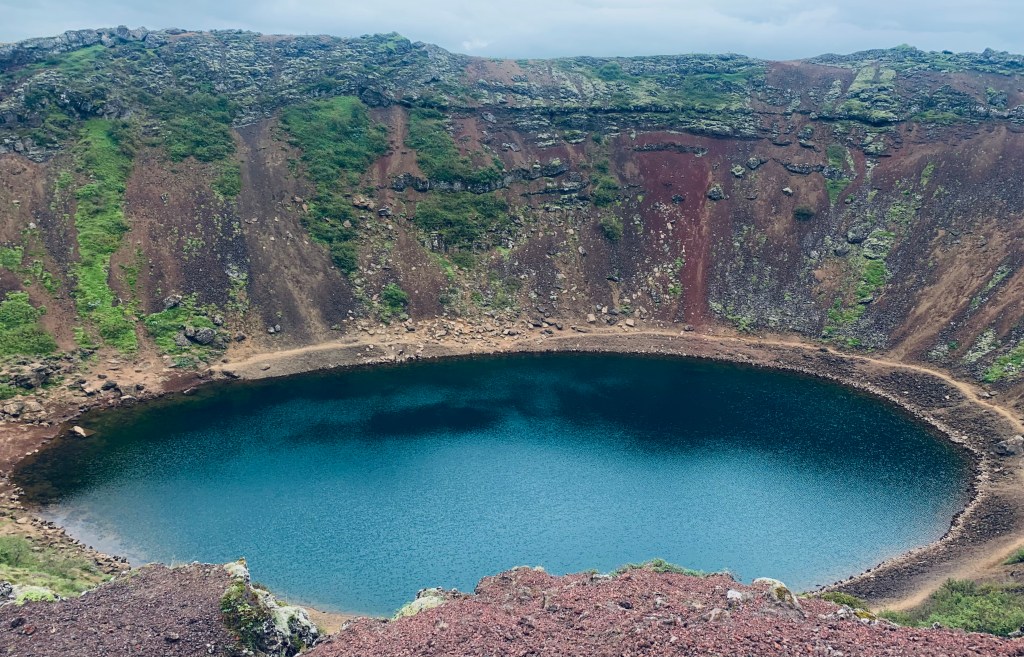
    Kerid crater lake, at a mere 180ft, provided just enough depth for an unexpected conversation between my younger siblings, my step-mother, her friend and her friend’s teenage daughter, and me. As we approached the ridge of the crater and began the spiral descent, a strained acknowledgement unfurled about my (much) younger brother. He was on the verge of leaving home for college… ‘flying the nest’.

    Once we reached the water’s edge and settled on a large rock, gazing into the dark aquamarine – almost luminescent – water, we seemed to sink deeper into our memories of caring for babies. The containment of the crater gave permission for us, the three mothers in the group mainly, to share our mixed feelings; about the intense relentlessness of caring for a dependent. And subsequently, the protracted loss of letting go. This coupled with a reluctance to face oneself again: We sat slightly back from the cryptic crater lake, choosing not to approach our reflections in the patient, waiting water.

    My own children are still young and so I don’t, yet, have to face that final wrench. I have memories of my younger siblings as babies and looking after them; feeding them, changing them, reading them to sleep. Now it’s like a gulf exists between us; emotionally as well as geographically. Where did they go? I often ask myself. Where did I go? They’ve probably been wondering. I became a parent. And when I do visit them in the US and when I do get a break from parenting… I’m inanely copying poems into my journal.

    What a brilliant memory though of the P-Town Carnival Parade; my young siblings and their diverse group of teenage friends dressed, ironically, in striking black swan costumes. My tiny intrepid daughter taking the lead, as a rainbow bird. I was watching on the sidelines, with her baby brother and with my father; the two of us (my Dad and I) dressed also as black swans, albeit half-heartedly.

    I wish I could be a better sibling, as we all watch our father slowly disappear – each with our individual and isolating experiences of this, it seems. Meanwhile, the cancer; gaining in power and pressure, exposes itself in my father’s crushing discomfort. A back-breaking battle with the ‘treatment’; an active volcano surging under the heavy earth and its gravity. He’s still going… and I wait with the weight of not knowing how to help from a distance, or even when we were close in Iceland, and not knowing, fearing, what it will be like at the end… and afterwards. Relieved that I have seen him. Regretful that I too, felt crushed.

    It wasn’t the holiday we had once hoped for (ambitious ‘wild west’ plans scuppered by Covid), yet it was one I will remember vividly. There were no dogs though, that would have helped! There were horses… lots of wild Icelandic horses… watching me in my grief. While the darkness of my father’s illness was held more lightly, perhaps, in the midnight sun. I’m not sure I could handle a winter there…

    P-Town, too, with it’s ‘special light’ and ‘gallus’* people, enabled me to tolerate delving into my darkness. I wish I had remembered this in the confines of my bedroom on a drizzly Brizzle day, during a global crisis, after a zoom session with a deeply distressed woman. Working in a tiny office space in my bedroom was a problematic, temporary situation I try not to think about these days. I try to remember that, with the ‘good enough’ conditions and containment,

    “Out of the darkness and formlessness something evolves…” (5)

    and

    “…This aesthetic element of beauty makes a very difficult situation tolerable”

    (Bion, 1978, from A Seminar held in Paris)

    But what about when it’s not good enough?

    And what of my grief for my counsellor of 5 years. I recall a crumpled ball of paper, a letter, held tightly in my fist, after reading it aloud to an empty chair. It was called ‘The Letter Your Teenager Can’t Write You’ (4) – again something I had copied because it summed up a lot of what I couldn’t feel, let alone say or write, when I was a teenager. I have since travelled a long way from that place with it’s extremes of stagnant, stifling heat and ice cold antipathy… am I trying too hard to be poetic here, as if it might make something less real… what am I actually trying to say? I felt constrained and bitter in relation to my parents? Nevertheless, I have since travelled to somewhere softer and lighter and more colourful.

    In our final session my counsellor and I had each prepared a journey and landscape to describe. Mine was akin to Collins’ antidote to ‘The Abyss’ in the final section of his poem as follows,

    ‘What attacker, I can hear you asking,

    could be down there messing with the sea cucumber?

    and that is exactly why I crumpled the map into a ball

    and stuffed it in a metal wastebasket

    before heading out for a long walk along a sunny trail

    in the thin, high-desert air, accompanied

    by juniper trees, wild flowers, and that gorgeous hawk.’

    (2)

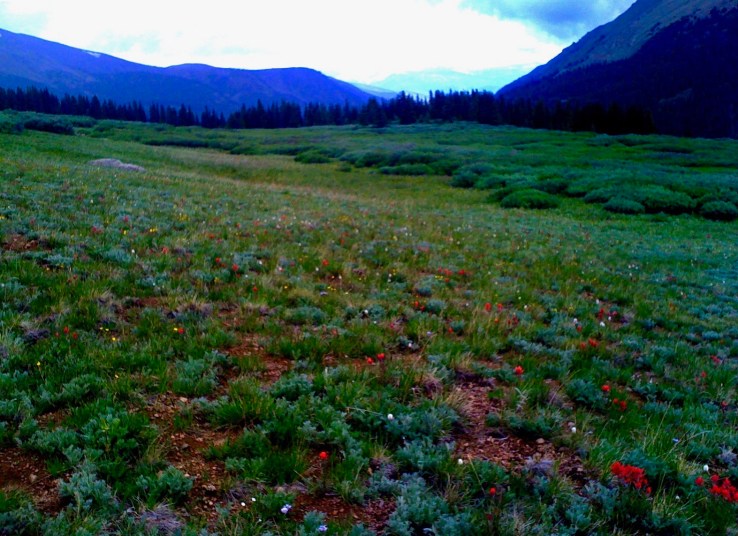
    The rocky mountains aren’t quite the desert, though provide the desired effect – as I soak up the memories and associations, the abundance of tiny mountain flowers of all colours; from my Colorado photos in the post ‘Mild Mild West’ – not dissimilar to parts of the Icelandic landscape, although the black rocky volcanic surroundings of Reykjavik were like nothing I’d ever seen before. I wish I had stepped onto one of the black sand beaches or walked behind a giant waterfall.

    I digress. My part-imagined/part-remembered place, with a herd of peaceful horses as witnesses, was the destination I chose to finally say goodbye to my cherished counsellor. Before moving on to discover the next leg of the journey.

    Most days though, I’m not gazing at a special light on the ocean, or soaking up the thrill of a progressive parade, or imagining traversing the rocky mountains in the company of wild horses… I’m juggling childcare and work; both draining in multiple similar and differing ways… and this is probably the sort of poem I need to be re-visiting:

    Haiku

    Walking the dog,

    you meet

    lots of dogs

    Soshi

    * ‘Gallus’ is a term my superb Scottish Sister-in-law recently told me when describing my 8 year old daughter. It means bold, cheeky, or flashy.

    © 2022 Psychodography Blog

    REFERENCES

    1. Braff, Z. (2004). Garden State. Fox Searchlight Pictures.
    2. Collins, B. (2013) ‘The Deep’, in Aimless Love: New and Selected Poems, Random House
    3. Sands, M. (2021) The Grounding Power of Walking, Therapy Today, 35-37
    4. Schmelzer, G. (2016) http://gretchenschmelzer.com/parents-corner
    5. Bion, W.R., (1990). Notes on Memory and Desire. In R. Langs, (Ed.), Classics in Psychoanalytic Technique (pp. 243 -244), Jason Aronson, Inc. (Original work published 1967).
  • Mild Mild West

    Mild Mild West

    Phone notes 2020:

    Coronavirus…

    April 5th (brother’s 40th)

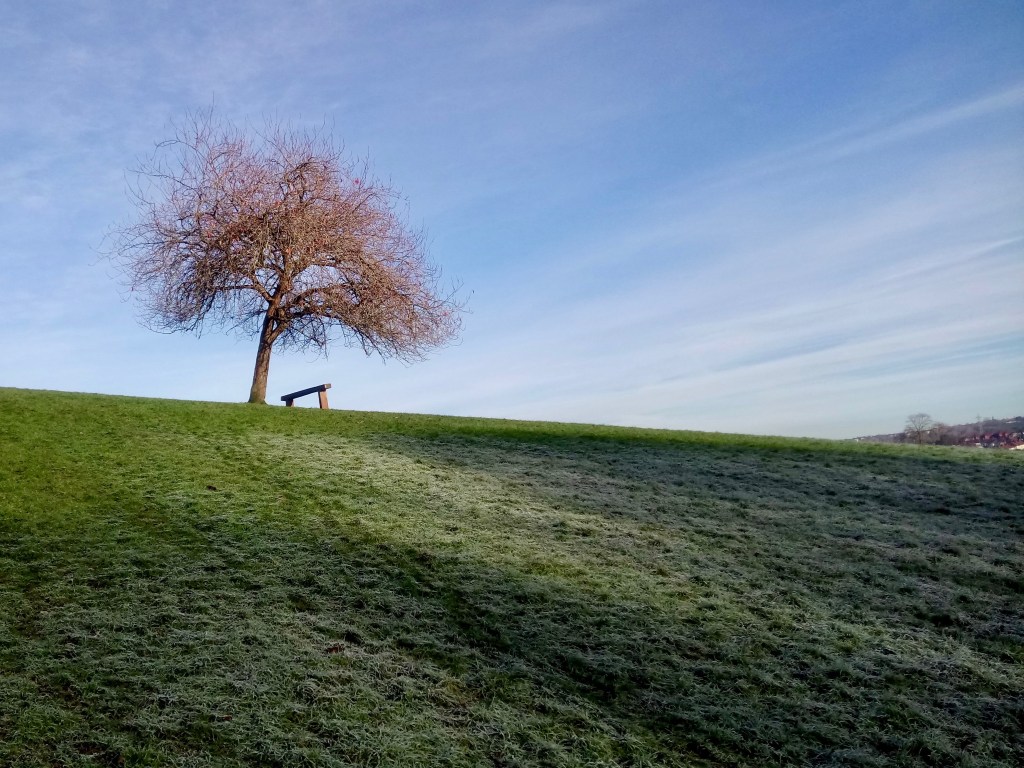
    Looking at pink tree in Arnos (park)

    Yesterday went to Callington Rd Nature Reserve, walked fast away from home, really needed that!

    I later wrote in my journal about this being the first proper walk we had, just my dog and me, as restrictions eased towards the end of the first lockdown. I was re-entering a forever changed world and also re-entering the world as my second child transitioned from baby to toddler and I could start to find myself again, but during such altered, awkward times. I felt such a dilemma when I reached some narrow steps and thought, ‘how do I socially distance here? What if someone comes?’ and gazing into the distance at the hills, trees, pining to be out of the city where I had felt trapped for months in full-time childcare exhaustion; yearning for space, the horizon, a cleansing forest

    Met a small snake

    Was thinking about how to start a story, vignette, whatever it is I’m writing…

    Place + event (e.g. Snake)

    Or Place + feeling (e.g. Freedom, space, escape, movement)

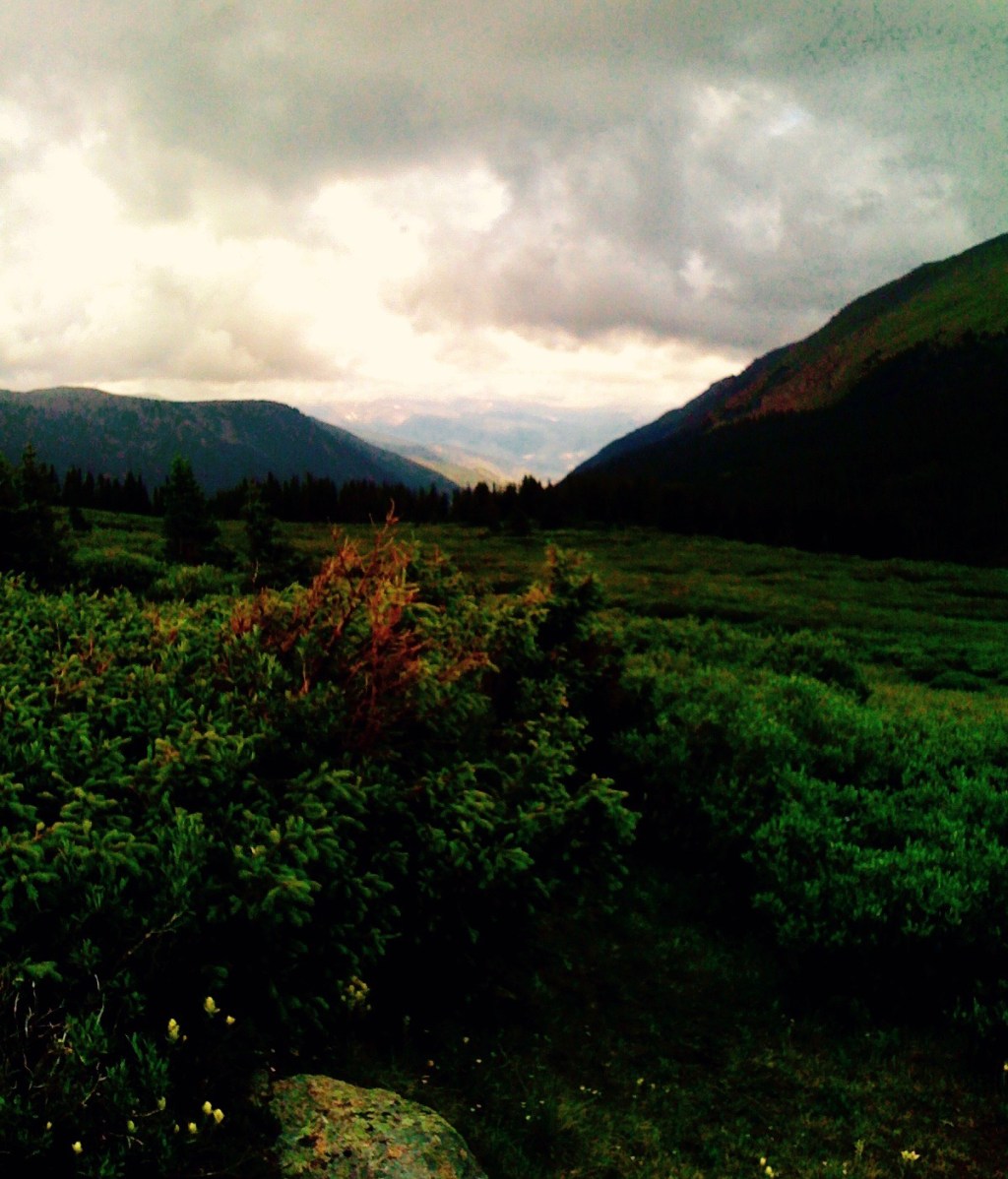
    Or Place + memory (e.g. Jurassic cliffs, hiking & riding in Colorado)

    I always start with place!

    Found myself naming things yesterday – line of tall trees, forgetmenots, hills, etc. (grounding)

    June – restrictions easing

    The cemetery is open, this is the most joyful thing that has happened for ages, ironically. This is where I process, this is where I feel safe, can walk for ages and still be close to home, winding this way and that, it doesn’t matter if the baby kicks off or does a poo or something

    Don’t even care that it’s raining

    It’s wonderful

    There are tadpoles in the pond

    I miss my dog, the two go hand in hand somehow (the cemetery and the dog – he was having a holiday in the countryside)

    Cuckoo

    13th Nov 2020

    2nd lockdown – not like the first

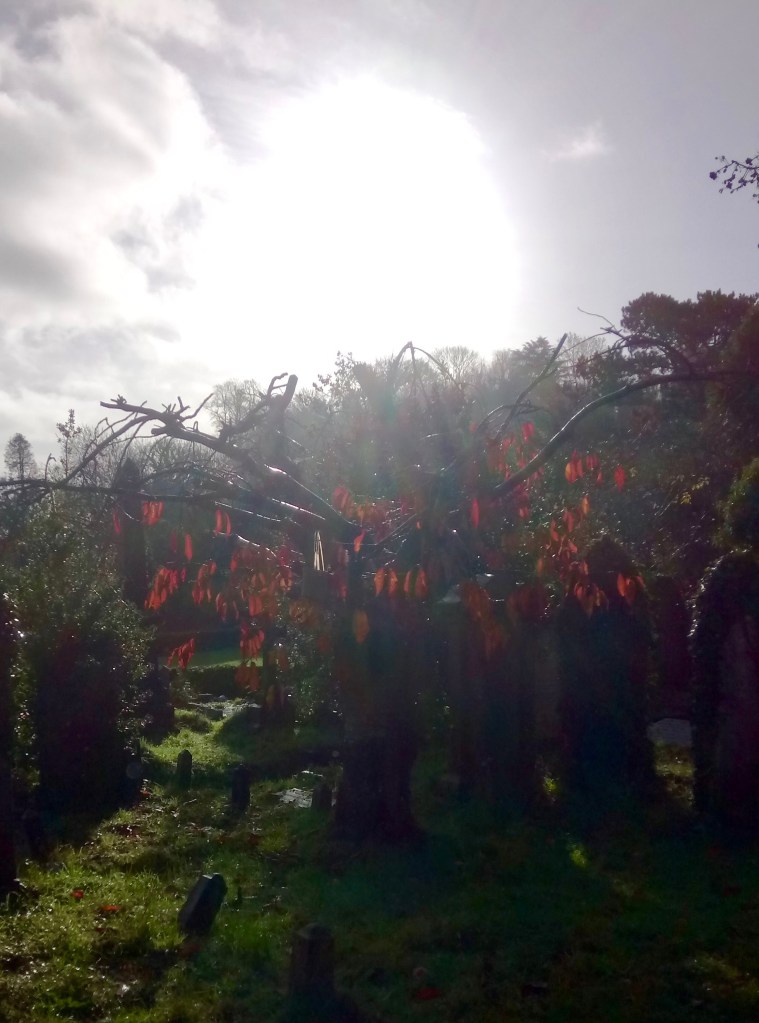
    Magical mizzle in the sun and red leaf tree

    Talking to people…

    It’s about keeping momentum going and not giving in to apathy

    15th Nov

    Nomar (he’s back!)

    Am I healed? Far from it, I have to work it like a muscle and never get complacent. However, the ‘worst’ traumatic memory is no longer right up in my face when I close my eyes, it’s further away, faded, as any memory should be…

    Shapesthree trees, semi circle of trees, curve in the road, triangle roofs

    Music is the next best thing to dog walking – couldn’t take Nomar into hospital with me for birth of second child (or the first, obviously) so the music I chose reminded me of trees, horses… e.g. The Cure (A Forest)

    Walks in lockdown6 year old talking my ears off, 1 year old tugging at my clothes or dipping snacks in a muddy puddle and then into his mouth, bored Nomar disappearing into bushes and emerging with various disgusting trophies, me – stressed, tired, hungry, thirsty, needing a wee, muddy, craving adult company… while some days are haunting me, others were real gems – early summer evening sitting in the park sketching trees with my daughter, Nomar sniffing around in the early evening glow, relaxed and free.

    Looking at tower blocks from a green space, thinking about people who don’t have gardens or parks/green spaces nearby…

    30th Dec

    Nearly the end of 2020, will 2021 be any better? Not at first that’s for sure. Robin singing… me watching (then flew off when I stopped), neutral, until teens play music – I instantly felt sad – it’s people who attribute emotion to everything, nature is a welcome neutral break, it helps just to be present and notice…

    June 2021

    Pram picture (please see ‘Fog & Willow’)... little did I know how isolating life would become in 2020

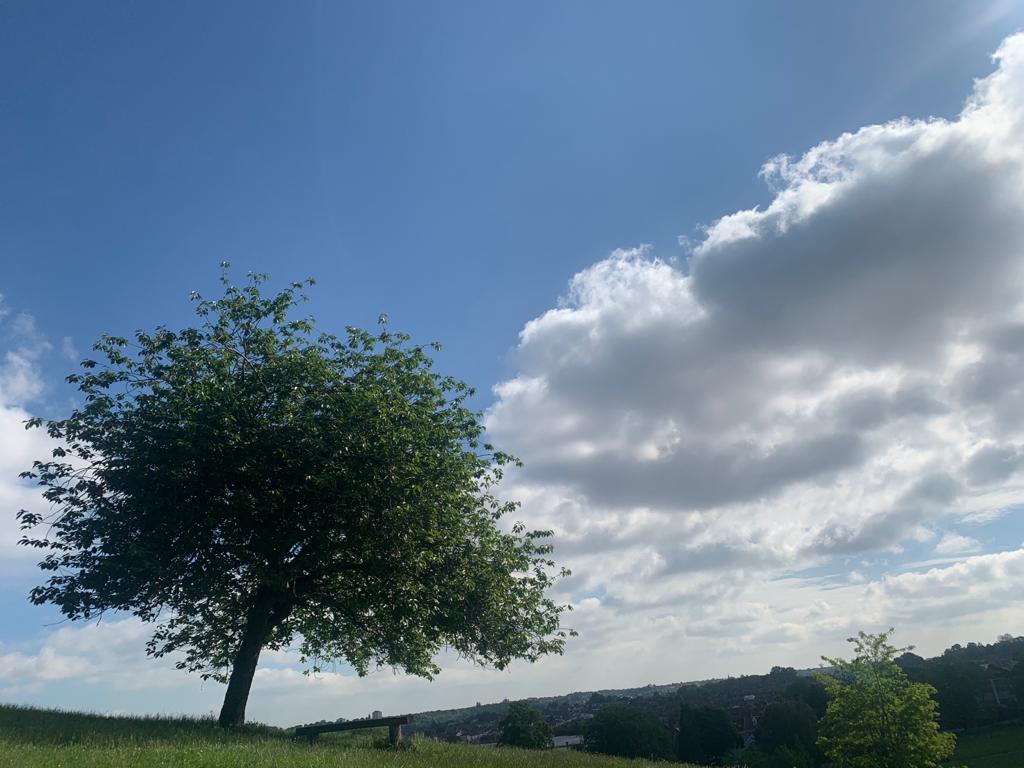
    Trying to capture summer tree, a gateway back into this process

    (I know this is a very lazy blog post by the way, I’ve had writer’s block for nearly a year! I needed a way to get back in, so I’m starting by just copying out my phone notes diary from the start of the pandemic, hoping it will ignite some kind of flow of writing again)

    I want and need… (this is what my toddler says and what I don’t say)

    Wales (in Llan-by-the-dog-eye, or however it’s spelt)

    Laburnum trees and multicoloured hedgerows – wonder in diversity Daydreaming about being somewhere else, yearning for something ‘beyond’ vs noticing what’s on the doorstep – the challenges of being still and present and content just with what is… acceptance… I’ve been a long way from acceptance lately, I have often been ‘elsewhere’, (while my children and job demand me to be ever present) – in the hypothetical catastrophic future, or the glimpses of idealised past. Right now I really need acceptance, really want and need it, for myself. To get back to the basics, get all the old tools out of the box and probably source new ones too – a mindful meander with my dog, pushing toddler in the buggy for his nap time, feeling the soft spongy comfort in the moss, looking up at the patterns in the leaves with the gentle sun shining through, hearing the whispers in the breeze, breathing in the earthy scents of delicate dew on meadow grass, musty dried leaves, musk of cows in a neighbouring field. I don’t need to go far, to strain myself or try to achieve anything in particular.

    I cannot ignore though, the distant aeroplane and the resigned resentment that I am not on it, not visiting the half of my family I haven’t seen for nearly 2 years and the somewhat hypothetical, yet fairly likely, nagging worry that there isn’t much time left to spend with my poorly father. His 9 lives are running out. And I always felt I didn’t have enough time with him, that he didn’t give enough of himself to me, even when he was there. And I have to accept that too, and that there is nothing I can do about it.

    What is it that’s so special about being with another ‘being’ (i.e. my dog) in silence. I’m going much slower than he would choose, yet he waits for me, does a bit of noticing of the immediate surroundings too – sniffing the abundant air (which of course is a much more intense experience for a hound), feeling the difference in the grassy, mossy bank on his feet vs the gravelly track, hearing the chittering birds and distant lawn mower (I assume). Then he lies down and looks back for me while I write these notes… he doesn’t utter a sound, not a grumble, no impatient sigh. He just waits.

    I guess I didn’t have writer’s block that day!

    I wanted to add photos of the forest in Wales and the dogs playing, from my first trip away from home after the pandemic started. Looking for these photos has added to the delay in getting this blog post done. I can’t find them, I have to accept it. As well as the forest and the dogs playing (Nomar and his Welsh friend), I was photographing obstacles and barriers; fences, big branches, gates, telegraph cables. I think this was in response to the gargantuan obstacle that is the pandemic and having felt trapped for months. I started thinking about obstacles to connection too and the Social Engagement System. I came across this from the blog “Don’t Try This Alone”, by Kathy Brous (1):

    ‘One way to get people back out of dissociation, aka freeze — aka trauma — says Porges, is to surround them with friendly mammals, and stimulate their mammalian social engagement systems to come back on line.  He gives the fascinating example of play. “Real play, is not playing with a ‘Game Boy’ or computer; it is not solitary,” Porges says. “Play requires social interaction  using face-to-face.”  Notice how the two dogs above are looking each other in the eye’, Brous refers to a photo included in the post and goes on to explain,

    ‘Play requires an ability to mobilize with the sympathetic nervous system and then to down-regulate the sympathetic excitation, using face-to-face social interaction and the social engagement system.  I have two little dogs; they chase each other, and nip. Then one will turn around to look at the other, a face-to-face interaction to ensure that biting was play and not aggression. In play, he says, we practice using our fight/flight systems properly – but we also practice to “diffuse them with social engagement.  So play requires face-to-face interactions. We see this in virtually all mammals.” (Porges)

    Perhaps the obstacles I was perceiving everywhere reflected the felt barriers to playfulness and social engagement, due to the stifling Covid restrictions. I recommend reading what Kohut and Winnicott had to say about playfulness (mentioned in some of my older posts). I also found it so very useful to read Porges’ article ‘The Covid-19 Pandemic is a Paradoxical Challenge to Our Nervous System…’ (2), which offers an explanation for how;

    ‘…the crisis elicits threat-related responses, disrupts our capacity to regulate our behavioral and emotional states, interferes with our optimism, and compromises our ability to trust and feel safe with another.’

    This helped to normalise for me the co-existence of heightened threat response/withdrawal from social connectedness and the feelings of resentment, disappointment, lack of optimism and sentimentality about places visited pre-pandemic. I even found myself reminiscing wistfully about the lack of aeroplanes in the clear blue sky during the first lockdown, because at least then I wasn’t grappling with anger and envy about all the people travelling (for trivial reasons; I imagined), whilst dreading a situation where I wouldn’t get to see my father before he dies. Now the aeroplanes are back and the sky is cloudy again.

    26th Julyfamily lockdown

    Garden obstacle course


    August – went to Iceland to see half of my family for first time in nearly 2 years; it seemed roughly halfway between the UK and the US, albeit slightly north. Travelling towards the arctic, to a sparsely populated country, felt – in a weird way, to some extent – like leaving Covid behind for a while. I struggle to describe the head-spinning extreme contrast between relief and intense sadness that I felt on this trip; which kicked in only once all our documentation had been approved and we were officially out of the airport and in a new country. I will write a lot more about this trip at some point, but I’m not ready yet.

    Writer’s block…

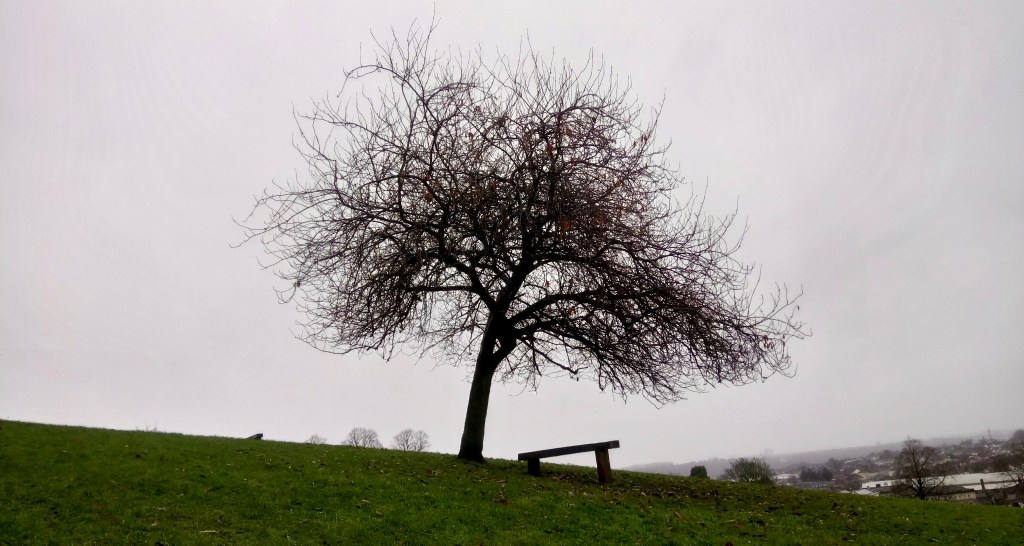
    13th Octmaybe ‘Mild Mild West’ post can be mostly photos: Colorado, Wales & Iceland. With an acknowledgement of writer’s block . About Disappointment, Obstacles & Permission. The leaning tree – support might be not as hard to get to as I thought, it’s the asking for help bit that’s really hard!

    25th OctAn easier day – some space – Brandon Hill – this is what I’ve needed (no far flung adventures, just a nice, safe park close to people). A nice park with water and a view, nothing to do for half an hour or so, not rushing, not stressed, not working, not doing anything for anyone else (for half an hour) – just for me

    ?DateFOG – fear, obligation & guilt – gets in the way of connecting with people – an obstacle – also gets in the way of moving on, letting go – once the FOG has gone, is there anything left of the relationship?

    It’s been nearly 2 years since the start of the first lockdown in the UK. As time went on and I had not produced another blog post, I was on the verge of giving up, so I set a goal for myself – to publish another post by the 2 year anniversary of the first lockdown starting. I’m about a month ahead of schedule, hurray!

    Now, as I reflect on snippets of my experience of the pandemic so far, through finally finding the capacity to engage with this blog process again, I feel profoundly moved by the multiple moments of connection I did have and a bursting gratitude for ‘normal’ daily life. This, existing alongside the disappointment of cancelled plans. One big plan was to go back to The Wild West with my father and family one last time, as a ‘last hurrah’ while his cancer remained dormant. Instead, we had a very different experience – Iceland – where I found my grief on a solid rock beside a huge still lake, somewhere in the Golden Circle.

    And as I think back to those early disorientating days of the virus; the desperate attempts at home-schooling, the interrupted naps (older child waking baby), the blur of sleep deprivation and resentment that my husband didn’t have a job where he could work from home. Groundhog day! Oh, and the visceral envy of my child-free neighbours drinking beer in the sun on a hammock in their garden in the middle of the day!!! Thank goodness for the ‘Lockdown Parenting Hell’ podcast (Rob Beckett & Josh Widdicombe), which I’m re-visiting and chuckling at as I write this – if only I’d found it sooner.

    When I let go of all of that, I remember some really special moments of not worrying or resenting so much, just doing my best, settling for some creative, outdoor home-schooling instead (whilst walking the dog and getting the baby to sleep in the buggy) and this makes me smile.

    © 2022 Psychodography Blog

    REFERENCES

    1. Brous, K. (2014) Stephen Porges: Social Engagement Heals. “Don’t Try This Alone”: The Silent Epidemic of Attachment Disorder. Retrieved from https://attachmentdisorderhealing.com/porges-polyvagal3/
    2. Porges, S. W. (2020) The Covid-19 Pandemic is a Paradoxical Challenge to Our Nervous System: A Polyvagal Perspective. Clin Neuropsychiatry, 17(2): 135–138.
  • 6 Parks in 60 minutes

    6 Parks in 60 minutes

    This morning I leant on a tree, closed my eyes and listened to woodpeckers.

    Schools are back, the birds are busy and there’s a frenzy of activity accompanying spring. How to keep a steady rhythm? Nomar is doing what he usually does, sniffing around looking for tennis balls. Nothing really changes for him, he’s oblivious! Which is quite nice in a way. It has felt essential to keep plodding on throughout the winter lockdown, head down, doggedly looking after kids, working, doing the chores… with very little light relief or anything concrete to look forward to. A hamster on a wheel, whilst juggling. Now that spring has arrived and restrictions are easing (we hope), there may be a tendency to get carried away and overdo it. Make up for ‘lost’ time. I can’t speak for anyone else of course but I wonder if we are a bit institutionalised in our own homes now. A slight panic creeps into my thoughts and muscles when I start to make plans and imagine meeting up with people again, go on journeys, stay overnight at other places. How do we make up for lost time without becoming overwhelmed? It feels necessary to take it steady, a gradual process of creeping out into the world again, blinking and rubbing our eyes.

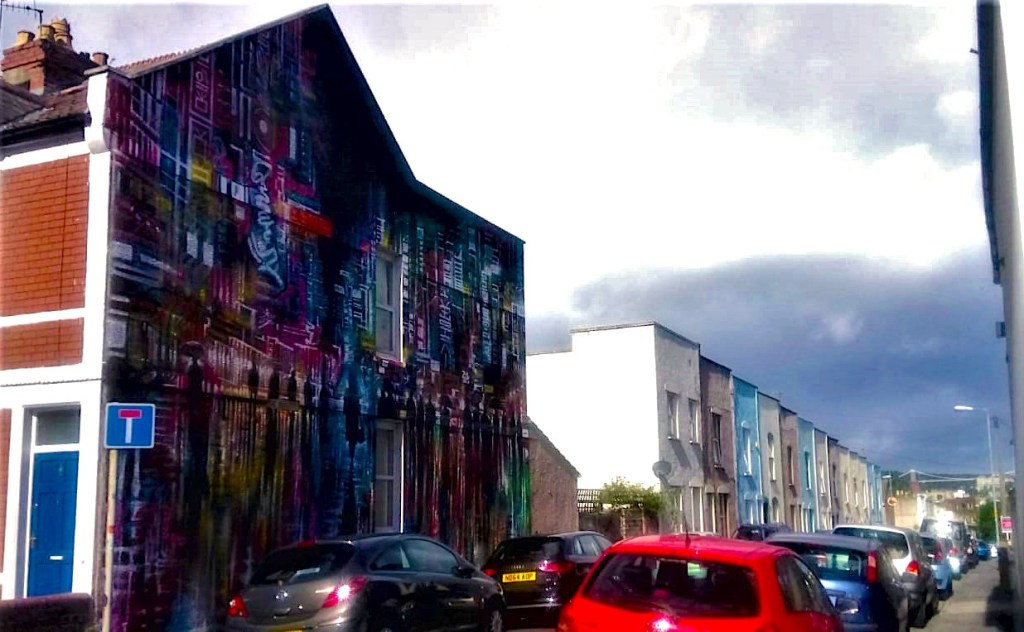
    In September 2018 I found myself free on Fridays to do whatever I wanted. I’d spent many hours in therapy working out how to find more space in my life. Suddenly, I had Fridays. I called it my ‘New Found Friday Freedom’. I decided to set myself and Nomar walking challenges, the first of which was ‘6 parks in 60 minutes’; an epic whistle stop tour of some of South Bristol’s parks and, as it turned out, street art.

    I increasingly felt, as the walk progressed, that I was two people with conflicting agendas – one of me was on the clock, determined to achieve my goal, whilst the other of me was repeatedly distracted along the way by the array of artwork in the streets and stubbornly kept stopping to stare and be mesmerised (much to the frustration of the other part of me and also Nomar, although he frequently stops to sniff anything and everything, which is equally frustrating).

    I took photos from various angles, trying to capture iconic Bristol landmarks in the background.

    Pondering on this push-pull with myself, I’ve started thinking about self-sabotage… putting obstacles in my own way when I set out to achieve something, hence not often deciding to set goals at all or make new years’ resolutions, or only half-arsed ones.  I also struggle on a daily basis to finish tasks that I have started and therefore, I am systematically denying myself that satisfied finished feeling and the rush of dopamine which can accompany it.  I can’t remember now if I was like this before having children, or if it’s a habit I’ve got stuck with, due to getting so used to being constantly interrupted.  I’ve noticed that when I do finish something big which has felt important to me, like a Counselling Diploma for example, I end up with a rather empty feeling inside and find that my mood drops for sometime afterwards.  It is not a surprise that I might struggle with endings and I often associate this with the wrench of leaving the family farm at the very start of adolescence and events which preceded and followed it (mentioned several times in the other blog posts).  

    For this post though, I’m interested in the relationship between the neurotransmitter dopamine and processing of reward.  Whenever we recognise a task as completed, usually – our brains release a load of dopamine and a sense of accomplishment.  Drugs which manipulate the dopamine system are dangerously addictive, as is gambling, for similar reasons.  Sue Gerhardt considers the impact of different types of childhood experiences on the brain and explains,

       ‘With plenty of dopamine activity, the child approaches experience in a positive way.  Dopamine flowing through the orbitofrontal cortex helps it to do its job of evaluating events and adapting to them quickly.  It also helps the child to delay gratification and stop and think about choices of action.  The child with fewer dopamine cells will be less aware of the positive rewards on offer, less able to adapt and think, may be physically slower, and may be more prone to depression and giving up.’

    (1)

    I’m not sure which applies to me… I tend to dwell incessantly on the potential consequences of my choices and actions, to the point where I feel like not bothering at all.  Am I blocking the rush of dopamine, or do I not feel like bothering because I sense there won’t be much of a rush at the end anyway?  Judy Ho (2) seeks to understand self-sabotage and why we get in our own way.  She suggests that it is in built into our survival and associated with attaining rewards and avoiding threats;

     ‘They aren’t independent systems, and there is a constant interplay in the brain to try to bring the two drives to an equilibrium’.  

    Self-sabotage occurs, she says, when our drive to avoid threats is more active than our motivation to attain rewards.  This is the tendency to over-estimate threats.  Thinking about striving for an equilibrium, got me reading more about polyvagal theory (3).  Before polyvagal theory, our nervous system was pictured as a two-part antagonistic system involving the sympathetic (fight/flight) and the parasympathetic (freeze/flop/fawn) nervous systems.  Polyvagal theory proposes the existence of a more cooperative, coherent ‘Social Engagement System’ (4); more of a parasympathetic-sympathetic interplay, 

       ‘The Polyvagal Theory provided us with a more sophisticated understanding of the biology of safety and danger, one based on the subtle interplay between the visceral experiences of our own bodies and the voices and faces of the people around us. It explains why a kind face or a soothing tone of voice can dramatically alter the way we feel. It clarifies why knowing that we are seen and heard by the important people in our lives can make us feel calm and safe, and why being ignored or dismissed can precipitate rage reactions or mental collapse. It helped us understand why attuning with another person can shift us out of disorganized and fearful states. In short, Porges’s theory makes us look beyond the effects of fight or flight and put social relationships front and centre in our understanding of trauma. It also suggested new approaches to healing that focus on strengthening the body’s system for regulating arousal.’

    (5)

    Therefore, our experiences of relationships and most notably, relationships in our childhoods, seem crucial for understanding the choices we make throughout our lives and our approaches to achieving our goals or avoiding them.  The impact of the pandemic and lack of social contact feels very relevant here too; in understanding why the world may feel a more threatening place now, even as the virus recedes, and why this may be exacerbated even more for some depending on their history. Meeting friends in the pub is not necessarily the relaxing and liberating experience it may once have been.

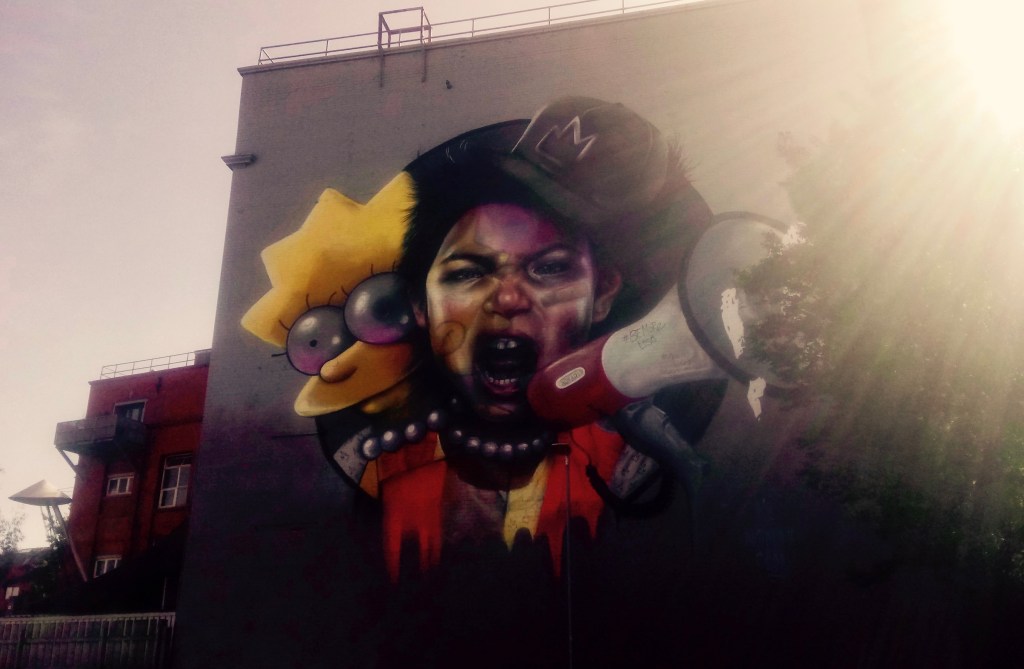
    Generally though, I often assume I am dealing with opposing forces within myself; a contrast between new choices and old habits, the paradox between wanting to challenge and make an impact or retreating into the shadows, the mismatched forces of anger and fear.  Family roles surely come into this.  For example, the Simpsons has been cited as demonstrating well-known family roles (6) such as ‘Hero’, ‘Scapegoat’, ‘Lost child’.  Lisa, for instance, is equated to the ‘Family Hero’; driven and striving for perfection, avoiding failure and shame at all costs, being the ‘good girl’ (with rage and resentment lurking in the background because it is a very difficult burden to shoulder).  I used to consider myself very ‘driven’.  I later realised it wasn’t sustainable and was detrimental to my health.  

    This began, I think, when I was going through the Clinical Psychology application process for the 4th time and had been offered 4 interviews. During the second one I froze and then burst into tears. I quickly went into flight mode and left there and then, promptly returning to the train station to go straight home, a journey of several hours. I sobbed the whole way. I cancelled the other two interviews and decided to never apply for a Clinical Psychology Doctorate ever again. This was a minor breakdown and major breakthrough. I find it fascinating now to seek to understand when self-sabotage is actually self-protection, self-preservation – when it is more of a help than a hindrance, to put it mildly. It had been drummed into me as a child that I wasn’t a ‘quitter’. So quitting this particular goal has become one of the most alleviating and liberating things I have ever done. I gave up. Ever since, a line from one of my favourite films, Garden State (7), often pops up into my mind: “I’m okay with being unimpressive, I sleep better”. I became happy to settle… and I mean settle in all senses of the word, including neurophysiologically… I became happy to settle for a 6 mile walk, with regular breaks to take photos and the reward of a delicious Chai Latte and cinnamon bun cake.

    This was the first and finest Chai Latte I had ever tasted, the sensory experience on my taste buds and olfactory system was intense.  I soon discovered this was partly because I was pregnant with my second child – the biggest obstacle possible to my New Found Friday Freedom! The next week I was tired and decided to stick to 3 parks in 30 minutes.

    © 2021 Psychodography Blog

    REFERENCES

    1. Gerhardt, S. (2004, 2015) Why Love Matters: How affection shapes a baby’s brain.  London/New York: Routledge.
    2. Ho, J. (2019). Stop Self-Sabotage: Six Steps to Unlock Your True Motivation, Harness Your Willpower, and Get Out of Your Own Way. HarperCollins: New York, NY.
    3. Porges, S.W. (2011) The Polyvagal Theory: Neurophysiological Foundations of Emotions, Attachment, Communication, and Self-regulation.  W. W. Norton & Company. ISBN 978-0-3937-0700-7.
    4. Porges, S.W. (2015) Making the World Safe for our Children: Down-regulating Defence and Up-regulating Social Engagement to ‘Optimise’ the Human Experience. Cambridge University Press.
    5. Van Der Kolk, Bessel (2014) The body keeps the score: brain, mind, and body in the healing of trauma. New York: Viking Penguin. p. 80ISBN 9780670785933. Retrieved 3 February 2018.
    6. Sweet, M. (2014) Dysfunctional Family Roles (Illustrated!). Retrieved from: blog.mattsweet.com
    7. Braff, Z. (2004). Garden State. Fox Searchlight Pictures.
  • Stepping out…

    Stepping out…

    Please proceed with caution if you come across this and have had some similar experiences to those described below – I was triggered for a long time by some of the same and similar words to those used in this post, which was why I didn’t include those words in much of my writing, until recently. This is where I make clear and plain some of the story that was missing (but alluded to) before. If this causes anyone pain or distress, I am very sorry. Please get in touch if you need to.

    This process started over 5 years ago. Why then, did I choose to make it public at the end of 2020? Because Layla F Saad said,

    ‘Introversion is not an excuse to stay in white silence… You can be an introvert and have powerful conversations. You can be an introvert and use writing to disrupt white supremacy. You can be an introvert and show up to protest marches. You do not have to be the loudest voice. But you do need to use your voice.’ (1)

    Since starting this process in 2016 for my research dissertation for a Counselling Diploma, it has never felt finished.  Those were simpler times, although I did not know that then and by no means did life feel simple.  Perhaps these are simpler times; a global virus spreading like wild fire, while wild fire destroys much of Australia.  Perhaps this is all to be expected given the climate emergency.  Perhaps, perhaps, perhaps… (it has just occurred to me how often I use this word and I have searched back through the original document and tried to find alternatives to my ambivalent perhapses).  

    I have dipped in and out of this ‘project’ over the years and finally came back to it in 2020 with the intention of finishing it and figuring out what, if anything, to do with it.  During the past 4 years I have had EMDR (Eye Movement Desensitization and Reprocessing) therapy, I have reported the rape that happened to me at age 15, a close friend tragically died from bowel cancer, I had my second child, a son, who was born on exactly the 1st anniversary of our friend’s death.  Meanwhile, global tensions rise, racial inequality intensifies and we enter the age of coronavirus. I recently returned to the article Walking Together (2), one of the main early influences for ‘Psychodography’. I was particularly drawn to this;

    ‘It seems to me that therapy cannot afford to ignore social justice. Psychogeography offers a radical, subversive, challenging critique of space that psychotherapy can benefit from…As Psychotherapists and counsellors we are engaged in the vital challenge to understand and communicate at depth with different cultures, races, and experiences…In our thinking too, we need to cross boundaries.’

    I doubt there’s anything radical or subversive about my walking, thinking or writing… it’s early days still. Then again, self-doubt is something I continually battle with.

    Within the constraints of our current circumstances i.e. global pandemic, what I’m trying to focus on the most is my intention, whilst identifying what there is yet to attend to in my own personal processing which may be holding me back, still. In terms of trauma recovery, I know I’m on the other side of the tunnel… I know this because there’s a circle sculpture in Arnos Vale Cemetery and I used to stand at a distance from it and stare at it, not through it, and sort of zone out at the same time. Now though, I approach it from the other side, with purpose and clarity. I wrote this sometime in the summer,

    ‘The circle. I can walk straight up to it from behind, bold as brass, and look straight through to the other side – I know what this means but I don’t suppose others will…’

    I also know it because I no longer get flashbacks or unpleasant triggers from listening to certain types of news. I can talk about what happened without dissociating or retreating into shame. I guess this part is probably easier for people to get their heads around than the circle/tunnel thing. At the start of EMDR, the therapist said something like, ‘do you want to focus on the first, the worst or the most recent?’ (traumatic memory). The worst is now no longer so active in my mind, it’s further away, faded, as any memory should be. Nevertheless, I think I have to keep working on it (the recovery I mean), like a muscle, and never get complacent. I feel the need to put it somewhere to keep an eye on it, hence part of the reason why I have put it here.

    It feels significant that I am finishing off this post in February too (only just), as it was in February that the rape happened, 23 years ago. I’ve often struggled with February and didn’t understand why for a long time. I mean, it’s not an easy month anyway, even without a lockdown (or a rape; tragically for many people, they have to endure both) – not quite spring, not quite light enough, not quite warm enough. The weather still feels harsh at times, resources are low from nearly 3 months of winter. This February, I’ve tried to notice warmth and softness wherever I can. The captivating gentle flurries and soft dusting of snow – if I stare at the snow falling for long enough, it takes on a sort of magical, unreal quality. Occasionally (childcare allowing), I have a warm bath when I get home, then wrap myself up in a blanket. And every evening I still light a candle of course. Perhaps each candle is for each person being abused around the world, I’m going to need a lot of candles! What does it mean when I blow the candle out?

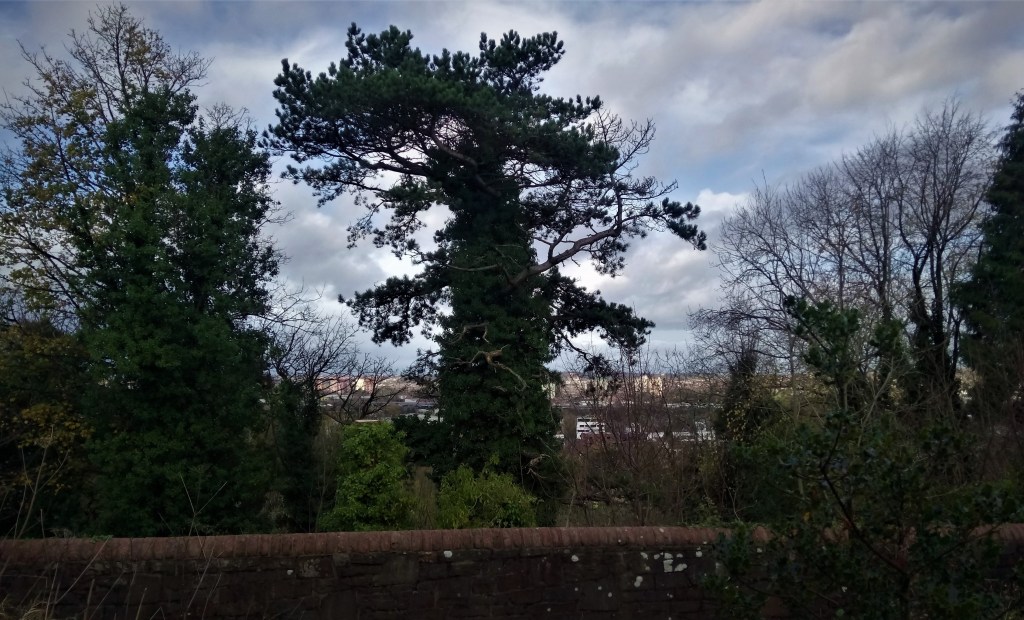
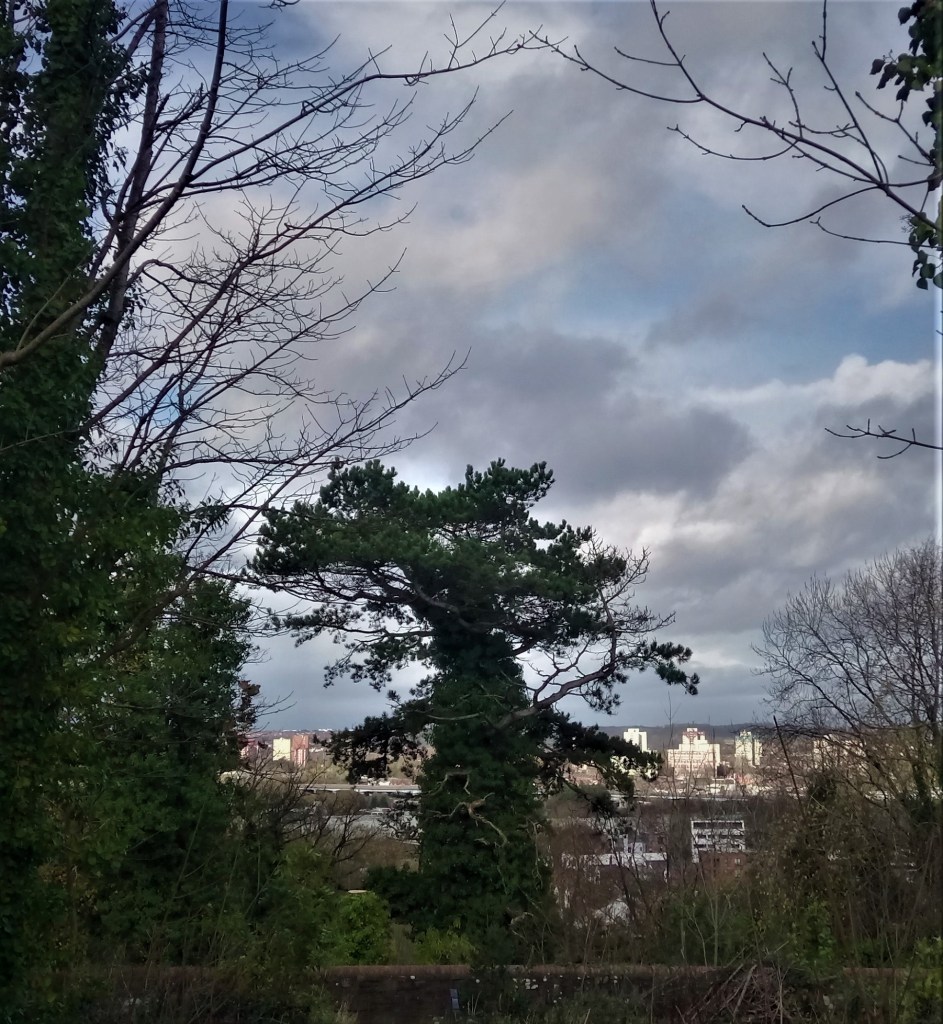
    I took a photo of what I now like to call the woolly tree; it’s a very tall tree engulfed in ivy, it looks like it has a massive body warmer on! I found myself gazing beyond the woolly tree, into the distance, at the tower blocks. I wondered what it might be like in lockdown to not have a garden or even a safe green space close by.


    To say a bit about the EMDR and the rape – I did not want to include this within the main story because the story is not about the rape, it is about self-care, about the anti-dotes to rape trauma (for me). Yet, it feels important to share something about EMDR, in case it’s helpful to others who might benefit from it, and it doesn’t make sense to mention EMDR without mentioning what I was having it for. EMDR was discovered by Francine Shapiro (3) while she was walking in the park (I like to think she had a dog with her too); this was one of the reasons it appealed to me. The aim was to push the trauma ‘through the tunnel’ and come out the other side with the memory processed, as all memories should be, and no longer lurking in the amygdala; ready to pounce at any given moment at the slightest perceived threat, the slightest mention of a similar experience on the news or by a colleague or client, the slightest re-visiting of the trauma with a therapist or in a personal development/therapy group. 

    Thankfully, the memory was indeed processed and began to fade.  It was no longer right up in my face when I closed my eyes in the shower, there was no longer a contaminated feeling within me.  I will admit, and a gentle warning to others thinking of trying it, it was unpleasant.  The kinds of things that my consciousness needed to do to the perpetrator in order to break the fixed images and hypo-arousal; experiment with alternative realities that at the time were not possible… these things were unpleasant, violent, powerful, disturbing and …necessary, to free that ‘freeze’ and ‘flop’ response (please see ‘Magic Pool’).  Doing this ‘work’ with a recommended and very experienced therapist, and having done the many years of ‘groundwork’ that preceded it (including this project), I was finally able to talk about the event with the police without becoming de-stabilised. Finally able to find some kind of closure. 

    Choosing to embark on a counselling diploma (and further unearthing lurking traumas) whilst looking after a very young child, may have been foolish.  I had to be very careful and patient around how and when I was going to process such experiences and be able to continue functioning as a parent day after day.  Maybe it took longer than it otherwise would have, but in that process I have learnt invaluable grounding tools that will stay with me for the rest of my life.  The worst trauma had already been unearthed, I suspect mostly by childbirth (I’ve since heard that this can be quite common – one of the many unfair paradoxes of life; a beautiful bright baby is born and at the very same time, our most hidden darkness emerges from the depths). 

    It wasn’t a sudden thing, it was a gradual process, amplified I’m sure by sleep deprivation and lack of space/time for myself (‘a perfect storm’ e.g. Mothers on the Edge; 4). Thankfully, it wasn’t quite ‘a perfect storm’ for me, but it was stormy. Flashbacks from the trauma were becoming increasingly intrusive and frequent.  So what better time, i supposed, to try to resolve it than during a supportive and safe counselling training course and ongoing therapy, a time when my support network was bigger and safer than it ever had been. I was being held by a huge container (e.g Bion, 5) of compassionate people.  

    The choice to report it was in the hope of reaching some kind of closure and because finally, 20 years after the event, I was able to cope with doing such a thing.  I did not feel I could live the rest of my life with the knowledge that I had never reported a very serious and by its nature, very violent, crime that was inflicted upon me as a teenage child.  I did it for the childhood that abruptly came to an end and for the woman I have struggled to become.  I did it for my daughter and the woman she will become (and now, for my son and the man he will become).  I also did it in case there was even the slimmest of chances that it might link to other, similar crimes, committed by the perpetrator.  Of course this did not happen (as far as I’m aware) and even to this day a residue of guilt and shame remains that I did not go to the police at the time or even tell my parents what had happened.  And then I remind myself… it was a different time, a different culture, it happened in a different country where I did not speak the language and where the age of consent was 14 and I may not have been believed that I had said ‘NO’. 

    Nevertheless, I did not even understand I was child at the time, and I was still reeling with hurt and anger about my father leaving our family the year before.  The holiday was supposed to help us re-connect.  Instead, I was bought alcoholic drinks in a bar, I was raped by a man more than twice my age, my father was searching for me all night and the next day he had an accident (which I witnessed), leaving him with a fractured spine and wearing a body cast for 6 months. The complex interweaving of these two traumas happening so close together and both feeling, for a long time, like my fault – caused my need for help and recovery to plunge down into the depths and not resurface for over 10 years; during which time I struggled with relationship problems, alcohol dependence, depression and anxiety, PTSD symptoms, irritable bowel syndrome, psoriasis and chronic urinary tract infections. I don’t know if all or any of these ‘symptoms’ were linked to the rape trauma, and/or other events and experiences in my life. What I do know is that now, ALL of them have improved.  

    Now that I’ve got here, I’m not sure what to do with my recovery next. Perhaps this relates to Babette Rothschild’s ‘KEY 8: Make Lemonade’ (6). I hope I have done a bit of this already in my counselling work. I want to do more. Michaela Coel’s bold and eloquent words in ‘I May Destroy You’ may help demonstrate what I mean (below). I had already decided to refer to this mighty quote and now it feels all the more important, after the show was unfathomably snubbed by the Golden Globes,

    “Do I actually know what it is to be a woman struggling?  A little rape in the mouth is a walk in the park when other girls are currently being stoned to death for having mobile phones, are bleeding to death after genital mutilation, are looking at a womb irreparably destroyed by militiers systematically raping them during times of civil conflict and war.  Are these facts a humbling reminder not to be so loud about my experiences, or are they a reminder to shout, can my shout help their silent screams?”  

    (7)

    Maybe it goes without saying, it wasn’t exclusively a rape in the mouth (I don’t think it was for Michaela’s character either, but I see her reasons for putting it this way). Nor, however, was it any of the other atrocities included above. Yet, answerless questions have often echoed around my head… How bad was my trauma?  How bad was my trauma in the context of being white, middle-class, privileged?  Perhaps the guilt and shame and silence and passivity and ambivalence… I was paralysed by for such a long time, go much much deeper than I first thought. 

    ‘Imagine a world where what women need rolls off the tongue with ease, and we no longer remember that there was a time when this conversation didn’t exist’

    (8)

    The conversation still does not exist for many women. I intend to move past my personal experiences, continue to crack open my toxic ‘learned silence’ (9) and find a voice to express the wider injustices, cruelties and catastrophes, which unquestionably deserve a torrent of shouts.

    It is time to ‘show up’ (1) for others and not just primarily other white women – as I did at a Women’s march after Trump’s inauguration, but failed to show up for the BLM march in my home city last year. There were many excuses not to go – the virus, the baby… and in hindsight I wonder if I thought it wasn’t my struggle. No it’s not my struggle, but it is my responsibility, I see that now. I get it. Or at least I’m closer to getting it than I was a few years ago. I also get it that this learning will be a lifelong challenge.

    This (above; 10) is what I was more focused on at the time of the Women’s march – what I wanted… to feel free from trauma and threat. To feel unconstrained by it. This seems irrelevant now in our new lockdown lives and it’s all relative anyway right? Maybe this desire will return one day and maybe (I seem to have swapped ‘perhaps’ for ‘maybe’) I’ll go and fly that kite on Chesil Beach, as was my intention after my weekend trip to the Dorset Coast with my dog (please see ‘The Experiment’). I do have the freedom to make that choice. In the meantime, other priorities feel more pressing.

    This is my first ‘step out’ of my comfort zone with regards to confronting my white privilege and starting to try to articulate my understanding, with the help of the wise and bold words of women (and men) whom I admire; that I cannot compare my struggles with all women, that it is my white responsibility to sort my own shit out and reach out to others… ALL others. I have so much more to learn about how to turn my silent rage into more ‘eloquent rage’, such as;

    “Real radicalism implores us to tell the whole ugly truth, even when it is inconvenient. To own the hurt and the pain. To own our shit, too. To think about it systemically and collectively, but never to diminish the import of the trauma.”

    (11)

    It took me over half of my life to even begin to take this risk. I don’t want to waste any more time, yet frustratingly… forbearingly… I know I need to tread carefully. I intend to one day (soon, hopefully) add a photo to this blog from a BLM or other anti-racism march, at the very least. My intention for 2021 though is to keep walking, keep writing and keep learning.

    © 2021 Psychodography Blog

    REFERENCES

    1. Saad, L. (2020) Me and White Supremacy: How to Recognise Your Privilege, Combat Racism and Change the World. Sourcebooks.
    2. Rose, C. (2016) Walking Together, Therapy Today, 22-25.
    3. Shapiro, F. (1989). Efficacy of the eye movement desensitization procedure in the treatment of traumatic memories. Journal of Traumatic Stress Studies, 2, 199–223.
    4. Theroux, L. & Casebow, M. (Director) (2019) Mothers on the Edge. BBC Two.
    5. Bion, W. (1962). Learning From Experience. London: Karnac Books.
    6. Rothschild, B. (2010) 8 Keys to Safe Trauma Recovery: Take-charge Strategies to Empower Your Healing. W.W. Norton.  New York.  London.
    7. I May Destroy You (2020), directed by Sam Miller, Michaela Coel. BBC One, HBO.
    8. Hasseldine, R. (2017) The Mother-Daughter Puzzle: A New Generational Understanding of the Mother-Daughter Relationship . Women’s Bookshelf Publishing.
    9. Hasseldine, R. (2007) The Silent Female Scream. Women’s Bookshelf Publishing.
    10. Plath, S. (2000) The Unabridged Journals of Sylvia Plath, edited by Karen V. Kukil. Anchor.
    11. Cooper, B. (2019) Eloquent Rage: A Black Feminist Discovers Her Superpower. St Martin’s Press.
  • Magic Pool

    Magic Pool

    On our walks, Nomar and I ‘move apart and we come together, with synergy, unspoken (mostly), without effort, like a dance’.  I feel a profound sense of belonging, I wonder if he does too?  Merleau-Ponty, a French phenomenological philosopher, suggested perception plays a foundational role in understanding the world as well as engaging with the world. His outlook was naturalistic in that ‘it sees human beings as integrated into the natural order, as fundamentally belonging to the world…’ (1)

    I thought Ashton Court would be my final destination in this story.  I found the voice recordings, the walking notes, etc., were detracting from my here-and-now experience, so I decided that was the end.  A month later I started again, there was more to say, more to record and listen back to, more to write, more to capture of the experience and cherish and use as powerful reminders of the restorative quality of these walks with my dog.  I realised I could do both; a little bit of recording and capturing, but mostly just practising staying present in each moment (2).  I grew in confidence, more at peace with myself and my choices, more authentic?  Walking further than before I came across a round pool, similar to the ‘magic pool’ I found on the Dorset cliffs into which I could imagine my past, present and future, reflected back at me – so clichéd I know, but that’s what I felt all the same.  Radiohead’s album ‘A Moon Shaped Pool’ (3) and the song ‘Present Tense’ kept going round and round in my head at the time.  

    I continue to explore power and vulnerability in the rich, green, open areas within the city and how this feels in my body, in relation to my surroundings.  Coming back to Merleau-Ponty, he emphasised the body as the primary site of knowing the world. I think I know what he meant. The power of movement is an essential antidote to persistent ‘freeze’ response (4) in my trauma recovery and building up muscle strength, which I feel is also an antidote to ‘flop’; one of the less well documented threat responses (5,6,7). 

    With this sense of power and my anchor [my dog] by my side, I can more deeply tolerate my vulnerability in the world.  Just up from the pool, there is a small patch of woodland with a triangle of branches on the ground.  I walked along them balancing in a childlike, playful way, and then stood, bold, arms in the air, eyes closed, feeling the power and vulnerability in my body simultaneously.  I could hear and feel Nomar close to me, just lying and waiting on the ground and I could keep my eyes closed for as long as I felt like it, no need to check over my shoulder in case of a threat.  Safe and secure and free.  I imagined being connected to the roots of the dark green trees with silvery-blue threads.  Right now as I write this, I have two songs by Timber Timbre playing in my head; ‘Woman’ and ‘Do I have Power?’   

    Trauma is explained by Kohut (8) as an affect overwhelming the mind’s capacity to maintain its balance.  If the seeds of vulnerability are sown early on, due to mis-attunement and lack of empathy, narcissistic injury is likely; a difficulty restoring balance when self-esteem is upset.  Consequently, rage is perhaps a breakdown of a child’s ‘innate healthy assertiveness’.  It is suggested a child can form a compensatory attachment with an object (or an animal?) and I feel that my assertiveness became embedded in my relationships with animals.  As a woman out with my dog I seem able to re-connect with stagnant rage and experiment with moving it through my body and voice, in a way that feels safe for me. 

    There is something about permission which has been creeping into my thoughts, recordings and notes. I have felt resistant to exploring this.  It seems dogs give me permission to seek my own space, guilt free.  Playfulness is considered an antidote to guilt, linking to Erikson’s Initiative vs. Guilt stage of development (9).  Having finished the counselling diploma several years ago and submitted a shorter version of this story within the constraints of the word limit, I have now taken the initiative to come back to it and give myself permission to continue with the process, just for me.  Nomar and I continue with our cemetery, park and river walks, we return to Ashton Court from time to time and I am planning a return to the Jurassic Coast, hopefully with the whole family – obviously as restrictions ease.  I notice that I do not feel quite so angry or quite so sad or quite so fearful. 

    One June I was struck by a sense of softness and stillness. I found myself reflecting on the Woodland Wellbeing group for people affected by Dementia. I was co-facilitating this group at the time along with two incredibly knowledgeable and creative ‘forest ladies’, as I like to call them! I wrote this as I recalled the latest session,

    ‘yesterday the fairy fluff offered to us from the willow trees softly caressed our faces and hair as if inviting us to stay still and be nourished, attending to each person equally, there is no judgement from the trees.  Willow is welcoming to all.’  

    In the summer months, in Ashton Court and Victoria Park, I often notice the abundance and variation of meadow flowers, the colours, the grasses and birdsong.  I delight in watching (Nomar) as he,

    ‘glides through a shimmering mist in the tall grasses… covered in shiny dew droplets and grass mist and tiny bright green seeds… he has become a pollenator’   

    Kohut’s endorsement of ‘playful creativeness’ (10) and my focus on experience of the environment seems to mirror my newly evolving psychogeography practice, with its emphasis on playfulness and “drifting” around urban (or sometimes rural) environments.  Hart described psychogeography as a ‘slightly stuffy term’ for, 

    “A whole toy box full of playful, inventive strategies for exploring… just about anything that takes pedestrians off their predictable paths and jolts them into a new awareness of the… landscape.”  

    (11)

    I am on an experimental pursuit of balance between past and present, light and dark, and that of multiple selves encompassing a whole.  Clients and counsellors alike are treading out new and unpredictable paths, etching new landscapes in the mind, abating the habitual and dissociative.  

    There is a simple version and a complex version of this autoethnographic process.  The simple version; I love going for walks and spending time with my dog and this is largely my only respite at this stage in my life.  The complex version I hope I have gone some way to clarifying in the other sections.  For this expedition I have had to engage the trust in my feet, the courage in my belly and the hope in my heart, to go out into the world and put the past behind me.  My mind, my imagination, have also become integral to this process.  Much of this is summed up nicely in my favourite of my children’s story books, ‘Augustus and His Smile’ by Catherine Rayner (12); where a sad tiger roams the world in search of his smile. 

    My counsellor and I have often talked about how wonderfully present children are, as well as dogs.  I love my daughter’s certainty about the things she likes; ‘I’m climbing and I do like it’ with the emphasis on the ‘do’.  Through becoming more present with myself, others and the world, I am moving beyond trauma, beyond grief and beyond ambivalence, towards a more solid sense of identity and belonging. 

    It greatly disturbed me to have my gender equality bubble burst upon becoming a mother/parent. The pervasive stereotypes and expectations based on gender; of both parents and children, has been shocking to me. Surely we’ve moved past this, I thought.

    Simply being in the world with my dog when I’m not fitting into some kind of role, is when I feel truly settled in myself. I am a person, I am a woman and I belong in the world.  I have friends and family; animal and human alike.  I am a wife AND a life partner.  I am a mother AND a co-parent.  I have been scared, lonely, trapped and in pain and right now I am safe, loved and free, and I am grateful.  I am becoming a counsellor, I am a counsellor, and I do like it.

    © 2021 Psychodography Blog

    REFERENCES

    1. Moran, D. (2000) Introduction to Phenomenology.  New York: Routledge.
    2. Stern, D. (2004) The Present Moment in Psychotherapy and Everyday Life. W.W. Norton.  New York.   
    3. Radiohead (2016) A Moon Shaped Pool.  XL.
    4. Rothschild, B. (2010) 8 Keys to Safe Trauma Recovery: Take-charge Strategies to Empower Your Healing. W.W. Norton.  New York.  London.
    5. Ogden, P. & Minton, K. (2000) Sensorimotor psychotherapy: one method for processing traumatic memory.  Traumatology, VI(3), article 3.
    6. Porges, S. (1995) Orienting in a defensive world: mammilian modifications of our evolutionary heritage.  A polyvagal theory.  Psychophysiology, 32, 301-318.
    7. Porges, S. (2004) Neuroception: a subconscious system for detecting threats and safety.  Zero to three, May 2004, 19-24.
    8. Kohut, H. (1972) Thoughts on narcissism and narcissistic rage.  Psychoanal. Study Child 27:360-399.
    9. Erikson, E. (1998). The life cycle completed. New York: Norton.
    10. Siegel, A. (1996) Heinz Kohut and the Psychology of the Self (Makers of Modern Psychotherapy).  New York: Routledge.
    11. Hart, J. (2004) A New Way of Walking.  Retrieved from http://www.utne.com/community/a-new-way-of-walking  
    12. Rayner, C. (2006) Augustus and His Smile. Magi Publications: London.
  • Borrowed Dogs

    Borrowed Dogs

    In August 2016 my father went into cardiac arrest and had no pulse for 7 minutes.  He was in intensive care for nearly a week and miraculously returned home unscathed not long after; roughly the fourth of his apparent nine lives.  This was following several years of cancer treatment – he had been in remission for some time and was beginning to feel better before his heart mysteriously stopped, so is the bitter irony of life.  His first (I think) near death experience – I witnessed within 24 hours of a traumatic ‘event’ when I was 15 years old.  The confused intertwining of this double trauma produced excessive shame and guilt which is too long and painful a story to go into here.  Rothschild’s ‘KEY 5: Reconcile Forgiveness and Shame; Part A. Forgive Your Limitations, Part B. Share Your Shame’ (1) has been invaluable, amongst other ‘shame’ literature, along with counselling placement training and supervision.


    Following what felt an excruciating decision to rush out to the US that August, the mindful tools; walking, noticing the surroundings and my movement, etc., I had picked up thus far, became essential.  My Dad and Step-Mum had two dogs at the time (see above; a Bassett Hound called ‘Violet’ and a Chocolate Labrador called ‘L’il Pork Chop’, or ‘Lily’ for short, who is sadly no longer with us). I borrowed them quite a lot, took them to the sea and the woods, sat outside with them in between visits to the hospital.  In the US suburbs, a person walking is not a very common sight, there are not many pavements, but walking with a dog along the pavement is kind of acceptable.  Devika Chawla’s descriptions of walking in the US and the incongruences with her childhood home come to mind, 

    ‘the absence of human bodies on the road made me almost apologetic for being on foot… the landscape was flat, boring, and dismal, a stark contrast to the lush and familiar greenery of the Himalayas – but putting my feet to the ground somehow made the place less strange making it almost a part of me.’ (2)

    My Dad’s place is sort of a home-from-home, despite being so far away.  Yet being there without my new family was almost unbearable.  The walking kept me stable and their dogs became my compensatory attachments (e.g. Kohut, 1977; 3).  Evening rituals helped me sleep and I practised grounding myself by holding my hand to my heart when it was aching and breathing steadily as the tears were welling up inside.  I now often use my most special stone from the Dorset Coast (please see ‘The Experiment’) in a similar way to ground myself. 

    I went back to my Dad’s with my husband and daughter on our actual pre-planned trip and we all went to stay in Provincetown, a wonderfully liberal peninsula.  The locals describe the sunrise and sunset as ‘the special light’.  In the morning the tide is out so far that it feels like walking for miles out to sea.  This is one of my ‘safe’ spaces in my inner world of memory and imagination, the other being the Dorset Coast with my dog – lying on a pebble beach with my eyes closed, the warm sun on my face, feeling secure against the firm stones, hearing the comforting sound of my dog paddling in the shallows, smelling wood smoke from the café behind us, refreshed by the cool sea breeze stroking my skin – as gentle as a feather, immersed in the senses and elements, content.  

    On the emergency flight over to the US that year, I watched a film about grief called ‘Demolition’.  It would have been a nice change that I was watching a film in peace without my 2 year old, had I not been agonising over whether my father would be alive or dead, or somewhere in between, when I got there.  I later came across a small article about the same film by Julian Edge (a counsellor with Age UK at the time) in the BACP magazine (4).  Edge described the storyline as a little ‘convoluted’, with the main character’s ‘desire to dismantle and destroy things – objects, machines, houses’ as a reaction to his grief. I felt, on the other hand, that this aspect of the story was captivating and empowering, almost addictive as an idea. This led later to some long overdue processing of my inner rage in therapy, which involved visualising myself driving a bulldozer and demolishing several houses I have lived in since leaving my childhood farm… until I got back to the farm in the bulldozer, stepped out, stood there and couldn’t work out what to do next. 

    For a while I was working towards actually, physically, demolishing something, maybe with a hammer, and I briefly (for about 2 minutes) looked into demolition jobs but was put off by the asbestos, amongst other things.  I now also wonder if I was drawn to this idea because counselling training and/or therapy are sort of a process of dismantling oneself and then putting the pieces back together again, maybe discarding a few along the way, or finding new ones… and then, preferably, forming a more cohesive whole – allowing the sharp, fragmented, warped memories to soften and fade. Power and movement, destruction and creation, seem crucial for me in releasing what has long been stored up and turned in on myself.

    Retroflection, from the Gestalt cycle of experience, can be described as the movement of an ocean current that doubles back on itself.  I wonder if this is often where I have got stuck on the cycle.  Creating more movement, with my voice, my body, my senses and in my imagination, serves to shift some of the stuckness.  Merleau-Ponty draws on Gestalt psychology and Husserlian phenomenology to emphasise that ‘human experience is an immensely complex weave of consciousness, body, and environment, best approached in terms of a holistic philosophy’ (Moran, 2000; 5).  I would like to somehow link my two safe spaces together, as it still feels there is a split within me, to achieve wholeness through creativity (e.g. Zinker, 1977; 6).  With it being my imagination, there are no rules… and I’m still working on it!

    The sometimes overwhelming desire to destroy something, to smash something to smithereens, has calmed down over the past few years. Yet I keep reminding myself that I got back to the farm in the bulldozer (visually, in my mind) and something else was supposed to happen. So what next? I’m guessing I need to say goodbye (please see ‘Unfinished Business’). I’ve tried going back there physically many times throughout my life, surreptitiously creeping past in my car without stopping, but to no avail, as in – no sense of closure was found. Maybe I need to say goodbye in therapy in some way. I’ve considered re-creating the farm with plasticine and adding the toy animals I often work with. And then, I don’t know, say something? As Julian Edge quite rightly pointed out in that film review, ‘If we can shift the ferocious energy of feel-think-do into the matter of words, perhaps we stand a better chance of having our experiences, instead of allowing our experiences to have us.’ 

    Nevertheless, there needs to be a right time to re-visit some things, to go and speak to the ghosts. What with a global pandemic, divided society, systemic racism, climate emergency, political mayhem… and the arrival of my second child… I have decided, for now, to let sleeping dogs lie… and let the baby crawl.

    © 2021 Psychodography Blog

    REFERENCES

    1. Rothschild, B. (2010) 8 Keys to Safe Trauma Recovery: Take-charge Strategies to Empower Your Healing. W.W. Norton.  New York.  London.
    2. Chawla, D. (2013) Walk, Walking, Talking Home. Rhymes, Reasons, and Ramblings.  Retrieved from https://devikachawla.wordpress.com/ 
    3. Kohut, H. (1977) The Restoration of the Self.  New York: Int. Univ. Press.
    4. Edge, J. ‘What’s the matter with words?’ Review of Demolition, directed by Jean-Marc Vallée. Therapy Today, Sept. 2016, p.41.
    5. Moran, D. (2000) Introduction to Phenomenology.  New York: Routledge.
    6. Zinker, J. (1977) Creative Process in Gestalt Therapy. New York: Brunner/Mazel Publishers.